One Piece Steel Flow: Cut, Blast, Tack, Weld, and Paint Without Queues
Move each steel member through the proven sequence so it does not pile up, wait, or get damaged on the ground.
- Creator
 WillytheMinimalist
- Company
 Southwest Steel Buildings
- Wastes
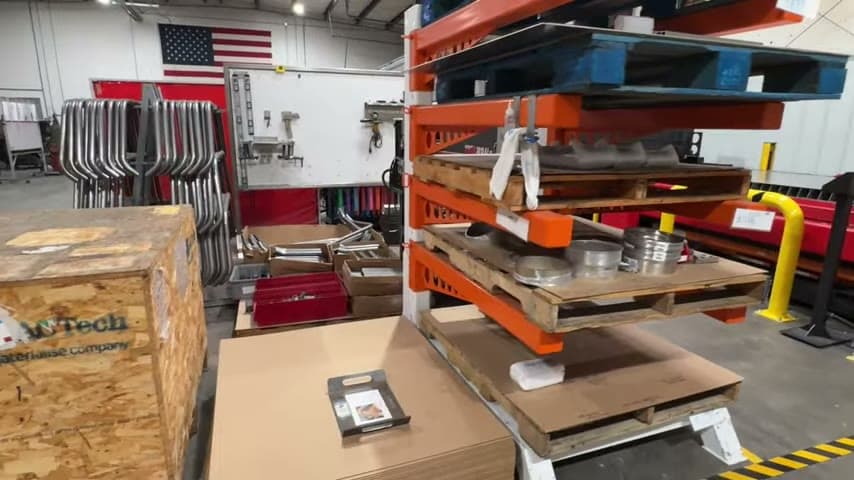
Steel was backing up between processes and sitting on its end or on the ground, where it could be damaged while waiting for the next step.
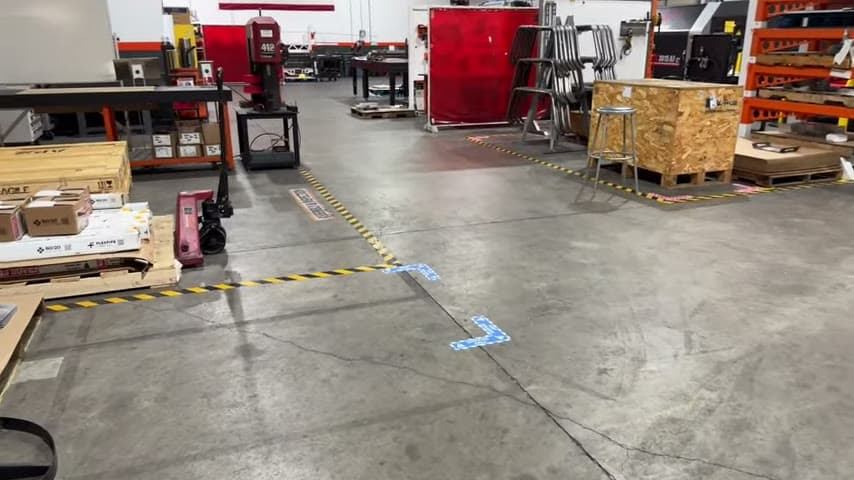
The team uses single piece flow. One rafter, column, or other steel member moves through cutting, blasting, tack-up, welding, and paint in sequence, with the ideal of going straight off the machines and onto the truck without touching the ground.
Make the proven process path visible and repeatable so every piece follows it.
What is a One Piece Steel Flow?
One piece steel flow is a standard way to move a single steel member through the full process without building piles between steps. The member follows the same route each time: cutting, blasting, tack-up, welding, paint, and then toward shipping.
The value is not just movement. The flow captures the team's best known sequence so everyone knows what should happen next and where the steel should go.
Because the steel does not sit in random places, the process is easier to mistake-proof. A piece is less likely to be damaged, missed, rehandled, or left waiting because the next step is visible.
Why it works
Single piece flow turns the correct process path into reusable knowledge that the whole team can follow.
- The fixed sequence shows the next correct step, so people do not have to decide where each piece should wait.
- Each process adds value in order instead of creating inventory between cutting, blasting, tack-up, welding, and paint.
- When nothing backs up, a blocked step becomes visible instead of being hidden in a pile.
- Keeping steel off the ground and out of random staging areas helps mistake-proof against damage.
Evidence: In the transcript, the team says steel gets damaged when it sits on its end, the ideal is to run it straight off the machines and onto the truck, and the goal is single piece flow where nothing backs up in the system.
How to create this idea
- 1Choose one product family
Start with a repeated item, such as a rafter or column. Prove the flow on one family before expanding it.
- 2Write the route
List the exact order: cutting, blasting, tack-up, welding, paint, and shipping. Make this the default path for that item.
- 3Remove random staging
Find every place where steel waits on the ground or on its end. Replace those spots with a clear next-step handoff or a defined waiting location.
- 4Move one piece
Release one member into the route and keep it moving to the next value-adding step. Do not allow extra pieces to pile up between processes without a known reason.
- 5Make backups visible
Treat any queue as a signal that the flow is broken. Stop and solve the cause instead of accepting the pile as normal.
- 6Update the standard
When damage or waiting is found, change the route, handoff, or storage rule so the same mistake is not repeated.
Best used when
- steel fabrication
- repeated members
- damage during staging
- queues between steps
- shipping after paint
Less useful when
- highly variable routing
- batch-only equipment
- long cure times
- unstable upstream flow
Products and tools mentioned
- Fabrication machine: Steel is intended to run straight off the machines instead of waiting on the ground.
- Steel: The workpiece moved one at a time through the process.
- Truck: The intended destination after processing, ideally without the steel touching the ground.
- paint: Coating applied to protect or mark parts, equipment, and surfaces.
Tags
- Problem
- inventorywaitingdamagetransportation
- Lean methods
- one piece flowstandard workvisual managementmistake proofing
- Application
- steel fabricationweldingpaintshipping
Captured from WillytheMinimalist at Southwest Steel Buildings in the video "Southwest Steel Buildings Lean Tour", at 00:03:23. On Lean Toolbox. Watch the original video on YouTube ↗