Colored Shipping Magnets: Show Pulled, Picked, Waiting, No Material, and Credit Hold Jobs
Use color-coded job magnets on the production board so shipping can plan from visible status instead of verbal updates.
- Creator
 Northwestern Michigan College
- Company
- Hayes Manufacturing
- Wastes
Shipping needs to know which jobs are pulled, picked, blocked by no material, waiting, or on credit hold. When those conditions are not visible, the shipping scheduler can plan from incomplete information and teams may chase or act on the wrong jobs.
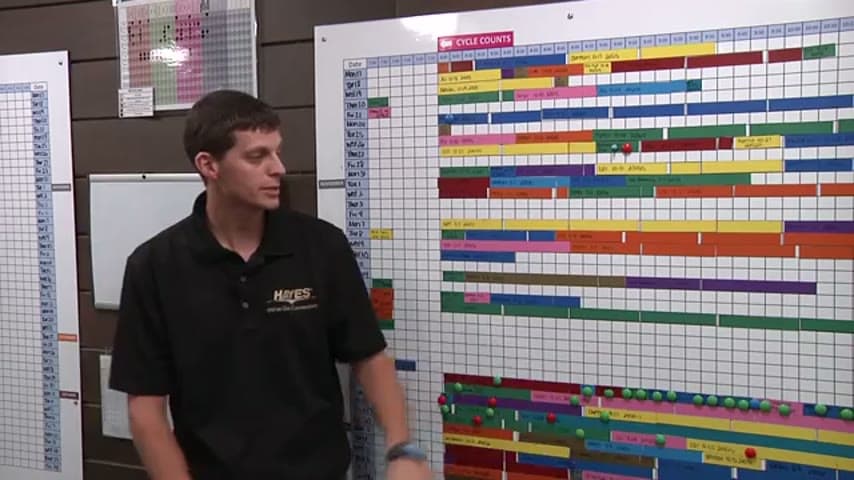
The team put colored shipping magnets on the production board. Each magnet represents a different job in shipping, and each color has a defined meaning for the job status.
Make proven status knowledge visible and reusable at the point of planning.
What is a Colored Shipping Magnets?
Colored shipping magnets are a visual control for shipping status. Each magnet represents one job, and the magnet color tells the team what condition that job is in.
In the video, the production control manager schedules jobs and passes that schedule to the shipping scheduler. The shipping scheduler uses the board to plan based on when jobs will be done.
The improvement statement names the visible statuses as pulled, picked, no material, waiting, and credit hold. The transcript confirms that yellow means pulled and in the shipping department, and green means the job is picked.
Why it works
The magnets convert job status from private knowledge into a shared, reusable signal for shipping decisions.
- Knowledge reuse: Production control and shipping can read the same board instead of re-asking where each job stands.
- Added value: The shipping scheduler can plan around real job conditions, including ready work and blocked work.
- Mistake-proofing: Standard color meanings reduce the chance of treating a held, waiting, or no-material job as ready.
- Better handoff: Status carries forward from production scheduling into shipping planning without relying only on memory or conversation.
Evidence: The transcript says the production control manager schedules jobs and passes them to the shipping scheduler, each magnet refers to a different job in shipping, and the colors have meanings, including yellow for pulled and green for picked.
How to create this idea
- 1List decision statuses
Write the shipping statuses that change what people should do. Use pulled, picked, no material, waiting, and credit hold if those match your process.
- 2Assign one color
Give each status one color and do not reuse that color for another meaning. Keep the color list short enough to remember.
- 3Make job magnets
Create one magnet for each shipping job. Put enough job identification on the magnet so the scheduler knows which order or job it represents.
- 4Post the legend
Put the color key directly on the production board. A person should be able to understand the board without asking another person what a color means.
- 5Update at handoffs
Change the magnet when production control hands the job to shipping and whenever the job becomes pulled, picked, waiting, short material, or credit hold.
- 6Use it for planning
Review the board during shipping scheduling. Treat unclear colors or stale magnets as defects in the status system.
Best used when
- shipping scheduling
- many active jobs
- production handoffs
- material shortages
- credit holds
Less useful when
- single job flow
- no shared board
- unclear status definitions
- status changes not updated
Tags
- Problem
- waitingstatus gapscredit holdmaterial shortage
- Lean methods
- visual managementvisual controlmistake proofingstandard work
- Application
- shippingschedulingproduction control
Captured from Northwestern Michigan College at Hayes Manufacturing in the video "Lean Management Systems: Visual Management at Hayes Manufacturing", at 00:04:02. On Lean Toolbox. Watch the original video on YouTube ↗