Small Internal Buffer Area: Limit Staged Inventory and Expose Holds
A small, defined staging area makes held work visible instead of letting waiting inventory spread through the shop.
- Creator
 American Precision Engineering
- Company
- American Precision Engineering
- Wastes
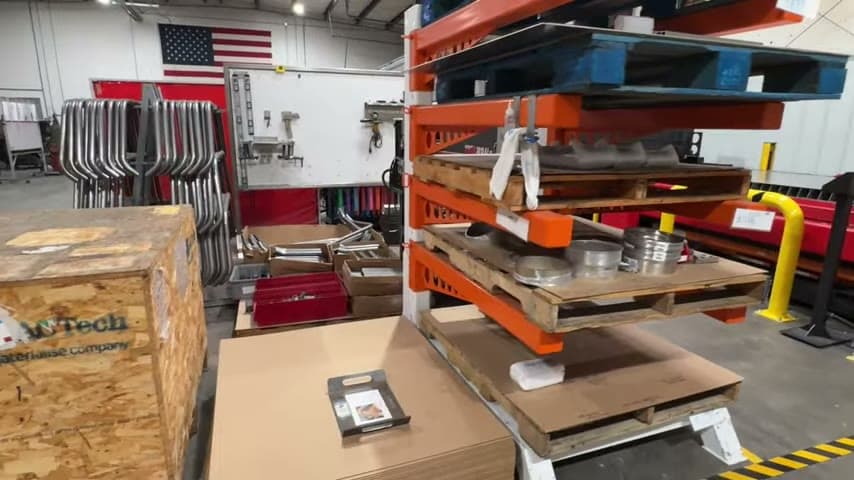
Projects that are too big for racks, on hold, or waiting for parts can accumulate in staging and hide why work is not moving.
The team kept pallet liners at the incoming point, made the normal path a pallet route through the shop or into a rack, and used a small internal buffer only for exceptions such as oversize projects, holds, or missing parts.
Make exception work visible so proven responses can be reused.
What is a Small Internal Buffer Area?
A small internal buffer area is a controlled staging location for work that cannot continue in the normal flow. It is not general storage. It is for clear exceptions, such as projects too big for racks, jobs on hold, or jobs waiting for parts.
In this example, pallet liners are kept where incoming pallets arrive. The preferred path is for the pallet to start working its way through the shop, with a rack used when needed.
The buffer makes abnormal work easy to see. If work is in the buffer, the team knows it needs a decision, parts, or another action before it can return to flow.
Why it works
The value is making exception status visible and reusable, so people do not keep rediscovering the same holds.
- It separates normal flow from exception flow, so a waiting job is not confused with regular staged work.
- It creates one shared place to look for holds, missing parts, and oversize work, turning status into common knowledge.
- The small area mistake proofs against unlimited staging because overflow becomes obvious.
- Keeping pallet liners at the start standardizes the first setup step before work enters the route.
Evidence: The transcript describes the area as an internal buffer for projects that are too big for racks, on hold, or waiting for parts to come in.
How to create this idea
- 1Define normal flow
Write the expected path for incoming work. In this case, a pallet gets a pallet liner, then should move through the shop or into a rack when needed.
- 2Name the exceptions
List the only reasons work may enter the buffer, such as too big for racks, on hold, or waiting for parts. Do not allow vague staging.
- 3Size it small
Set a limited area so inventory cannot grow unnoticed. When it fills, treat that as a signal to solve the holds.
- 4Keep it distinct
Make the buffer clearly different from normal rack locations and the normal pallet route. Anyone should be able to tell when work is in exception status.
- 5Review the holds
Check each item in the buffer and ask what is needed to move it. Capture repeated causes so the team can reuse the same response instead of solving the delay again.
Best used when
- pallet routing
- job shop flow
- parts holds
- oversize projects
- shared staging
Less useful when
- single piece flow
- no staged work
- unclear ownership
- unavoidable storage
Products and tools mentioned
- pallet: Used as the physical capacity limit for the rack.
- pallet liner: Stored at the pallet start point so each incoming pallet gets one.
- storage rack: Rack for holding stock, parts, or materials in an organized layout.
Tags
- Problem
- inventorywaitingholds
- Lean methods
- visual managementstandard workflow
- Application
- stagingjob shopmaterial flow
Captured from American Precision Engineering at American Precision Engineering in the video "Tour of APE's lean shop", at 00:08:13. On Lean Toolbox. Watch the original video on YouTube ↗