Linked Shipping Board: Plan Shipments From Production Completion Dates
A shipping board tied to the production board lets shipping plan from the dates production already knows.
- Creator
 Northwestern Michigan College
- Company
- Hayes Manufacturing
- Wastes
Shipping needs reliable completion dates from production to plan outbound work. Without a visible handoff, shipping can wait for finished jobs, plan from guesses, or prepare shipments before material and production status are clear.
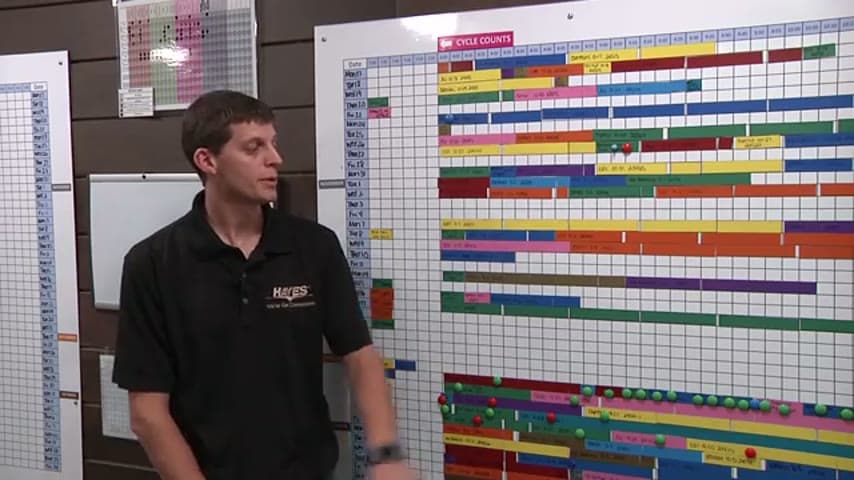
The team linked the shipping board to the production board. After the production control manager schedules jobs and knows when they will be done, that information is passed to shipping. The production board also uses a pink magnet to show material still needs to be ordered and a green magnet to show material has been ordered so the job can be released to the shop.
Make upstream schedule knowledge visible and reusable by the next process.
What is a Linked Shipping Board?
A linked shipping board is a visual planning board that uses production completion dates to plan outbound shipments. It connects the shop schedule to the shipping schedule so shipping does not have to rebuild or guess the plan.
In this example, the production board shows job and material status. A pink magnet tells the purchasing manager that material still needs to be ordered. A green magnet shows the material has been ordered, so the production manager can pull the job and send it to the shop.
Once the production control manager schedules jobs and knows when they will be done, that information is passed to the shipping board. Shipping can then plan from the same completion dates production is using.
Why it works
The board turns production status into reusable knowledge for shipping, which adds value by making the next process plan from known facts.
- Knowledge reuse: Production completion dates are made visible to shipping instead of being reasked, guessed, or recreated.
- Added value: Shipping plans around the work that will actually be ready, which supports customer delivery planning.
- Mistake proofing: Pink and green magnets make material status visible, reducing the chance that a job is treated as ready before material has been ordered.
- Handoff control: Passing scheduled completion dates from production control to shipping makes the transfer of information explicit.
Evidence: The transcript says the shipping board ties in from the production board, and after the production control manager schedules jobs and knows when they will be done, she passes it over to shipping.
How to create this idea
- 1Define the date source
Decide who owns the production completion date. In this example, the production control manager schedules the jobs and identifies when they will be done.
- 2Build the production board
Show each job and its current status where production, purchasing, and shipping can read it. Include the information shipping needs to plan later work.
- 3Add simple signals
Use clear visual markers for status. For example, use a pink magnet for material that still needs to be ordered and a green magnet for material that has been ordered.
- 4Create the shipping board
Set up a shipping board that receives job completion information from the production board. Make the link between the two boards part of the normal scheduling process.
- 5Hand off completion dates
When the production schedule is set and completion dates are known, update the shipping board. Shipping then plans shipments from those dates.
Best used when
- scheduled production
- shipping after production
- material ordering gates
- shared job status
Less useful when
- no shipping handoff
- unknown completion dates
- fully integrated scheduling
- single job flow
Tags
- Problem
- waitingtransportationschedule gaps
- Lean methods
- visual managementpull systemmistake proofing
- Application
- shippingproduction controlpurchasing
Captured from Northwestern Michigan College at Hayes Manufacturing in the video "Lean Management Systems: Visual Management at Hayes Manufacturing", at 00:03:42. On Lean Toolbox. Watch the original video on YouTube ↗