One-Piece Flow Conveyors Between Folding and Boxing
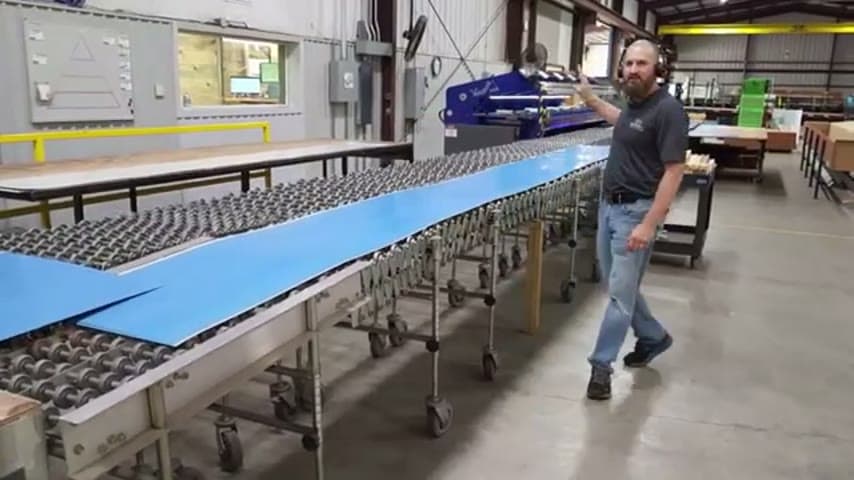
Conveyors carry trim one piece at a time through folding and boxing to end batch handling.
- Creator
 TheAMEConnect
- Improvement date
- June 16, 2024
- Company
 Southwest Steel Buildings
- Wastes
Trim jobs were moved in batches and set down in stacks. The job you needed was rarely on top because something changed, forcing rehandling and searching. Batch staging created waiting and repeated hand transport between folding and boxing.
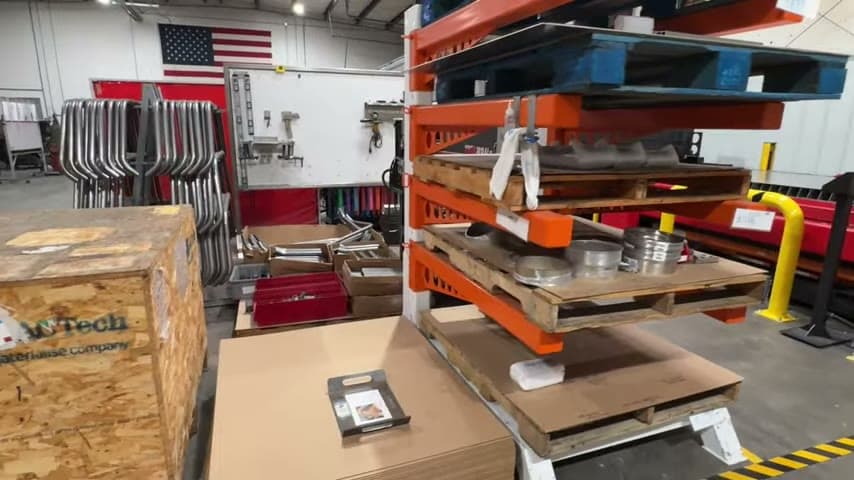
The team installed conveyors so a single job moves piece by piece from slitting to folding to boxing. Instead of building a batch and setting it aside, one piece is sent down and folded as it goes, then moves straight to the next step.
One-piece flow beats batching by exposing problems immediately and eliminating rehandling.
What is a One-Piece Flow Conveyors Between Folding and Boxing?
One-piece flow is a way of processing where a single unit moves through each step in sequence rather than being built up into a batch and handed off all at once. Here, conveyors link slitting, folding, and boxing so one job travels continuously through the line.
With batches, work piles up between stations. Operators set stacks down, then have to sort through them later, and the exact job needed is often buried. Conveyors remove that staging by carrying each piece directly to the next operator as it is finished.
The result is a visible, predictable path for every job. Anyone can see what is being worked and what is next, so the guesswork of finding the right piece in a stack disappears.
Why it works
Flowing one piece at a time makes the proven process visible and repeatable, so quality and status are obvious to everyone.
- A single job in process is easy to identify, ending the search through stacks for the right piece.
- The conveyor enforces the correct sequence, so slitting, folding, and boxing always happen in order.
- Problems surface at the piece that has them instead of hiding inside a batch discovered later.
- The standard path is built into the layout, so new operators follow it without needing to remember it.
How to create this idea
- 1Map the current batch flow
Trace how jobs move today between slitting, folding, and boxing, and note where stacks are set down and rehandled.
- 2Define one-piece sequence
Decide the order each single job must pass through: slit, move, fold, box.
- 3Add conveyors between steps
Install conveyors to carry one piece at a time from station to station so nothing is staged in batches.
- 4Fold and process in motion
Set up stations so operators fold and slit as the piece moves through, going straight from one step to the next.
- 5Remove batch staging areas
Eliminate the drop zones where stacks were built so the temptation to batch is gone.
Best used when
- sequential steps
- high mix jobs
- frequent rehandling
- batch staging waste
Less useful when
- single fixed operation
- very long cycle times
- no space for conveyor
Products and tools mentioned
- conveyor: Powered or gravity system moving parts along a production flow.
Tags
- Problem
- batch handlingrehandlingwaiting
- Lean methods
- one-piece flowflowlayout
- Application
- trimfoldingboxing
Captured from TheAMEConnect at Southwest Steel Buildings in the video "AME 2 Second Lean Tour: Southwest Steel Buildings", at 00:31:51. On Lean Toolbox. Watch the original video on YouTube ↗