Point-of-Use Welder at the Robot Station: Tack Weld Without Leaving the Cell
Place a welder at the weld robot station so tack welds happen where the need appears.
- Creator
 JCR Lean Ninjas
- Company
 Fat American Manufacturing
- Wastes
Tack welds at the weld robot station caused trips away from the work area, interruptions, and waiting.
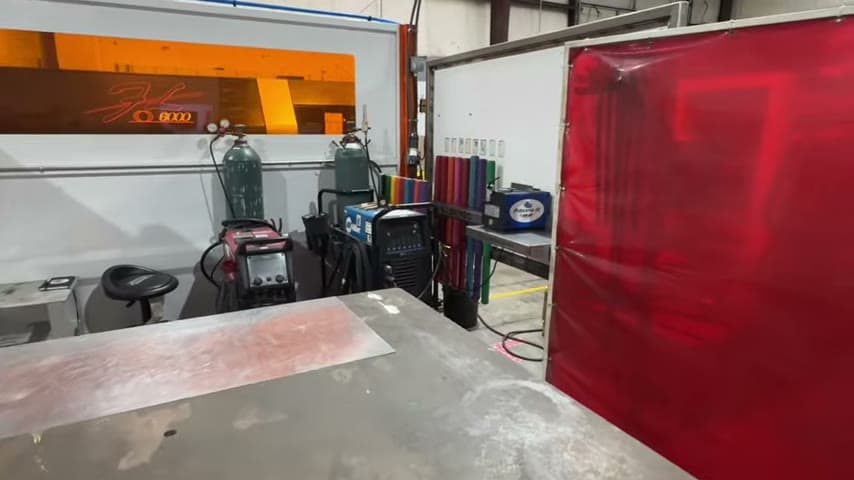
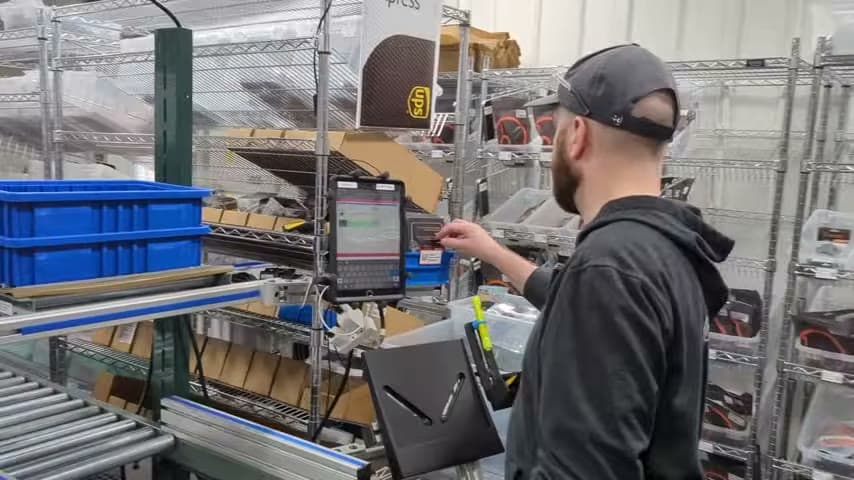
The team added a welder directly at the weld robot station so tack welds can be completed at the point of use.
Make the proven support method visible and reusable at the point of use.
What is a Point-of-Use Welder at the Robot Station?
A point-of-use welder is a welding tool placed where tack welds are actually needed, instead of keeping that task separate from the station.
In this example, the welder was added at the weld robot station. When a tack weld is needed, the operator can use the local welder as part of the station's normal work.
The key improvement is knowledge reuse. The station now shows the correct way to handle tack welds, so people do not have to re-decide where to go, wait for another resource, or create a workaround.
Why it works
The welder makes the proven tack-weld support process visible, repeatable, and available where value is being created.
- Knowledge reuse: The station itself shows the known answer for tack welds, so each person does not solve the same support problem again.
- Added value: More attention stays on preparing and completing the welded part at the robot station.
- Mistake-proofing: Keeping the welder with the station reduces the chance of skipped tack welds, off-standard work, or interruptions caused by leaving the area.
- Flow support: A recurring support need is built into the station instead of treated as an exception.
Evidence: The transcript identifies the new welder at the weld robot station as the improvement to the location, station, and work area.
How to create this idea
- 1Find repeated interruptions
Look for small support tasks that repeatedly pull people away from a station. In this case, the task was tack welding at the weld robot station.
- 2Confirm the point of use
Identify where the need appears in the work. Place the support resource where the task should be performed, not where it has historically been stored.
- 3Move the tool into the station
Add the needed tool at the work area. For this improvement, the tool is a welder placed at the weld robot station.
- 4Make the method obvious
Give the welder a clear home and define when it is used. The goal is to make the proven tack-weld process easy to follow.
- 5Watch for workarounds
After installation, observe whether people still leave the station for tack welds. If they do, improve access, placement, or the standard.
Best used when
- repeated tack welds
- robot weld stations
- station interruptions
- shared welding need
Less useful when
- rare tack welds
- unsafe placement
- no qualified user
- no station space
Tags
- Problem
- interruptionswaitingmotion
- Lean methods
- point of usestandard workknowledge reuse
- Application
- weldingrobot cellmanufacturing
Captured from JCR Lean Ninjas at Fat American Manufacturing in the video "KB showing a new improvement at the robot.", at 00:00:08. On Lean Toolbox. Watch the original video on YouTube ↗