Gravity-Fed Screw Box Rack for Continuous Packaging Supply
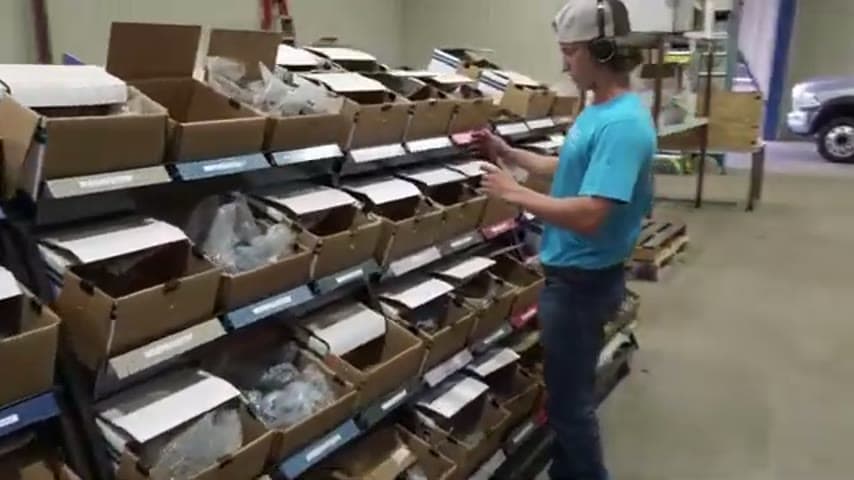
A sloped rack self-feeds a fresh box of screws the instant one empties, so packaging never stops.
- Creator
 TheAMEConnect
- Improvement date
- June 16, 2024
- Company
 Southwest Steel Buildings
- Wastes
Packaging screws required double handling: screws were emptied out of boxes into bins, then taken back out of bins and returned to boxes. When a box ran dry there was a pause while someone fetched and staged the next one, creating waiting and excess in-process inventory.
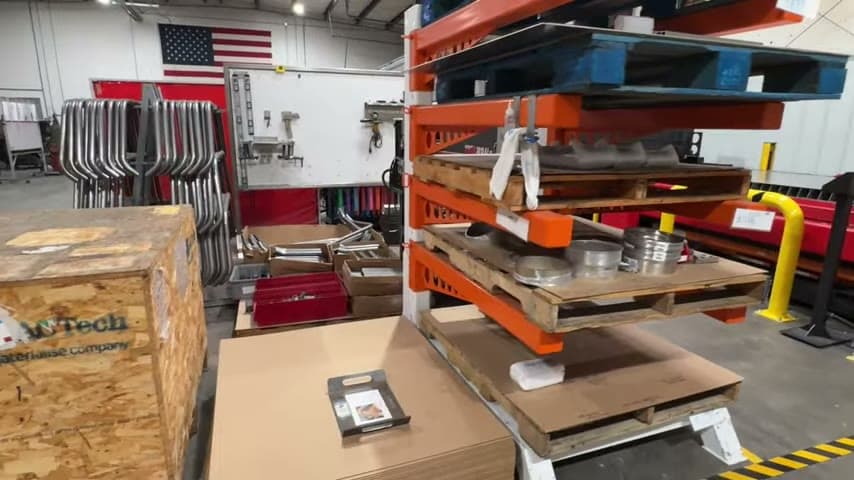
The team built a gravity-fed rack that holds queued boxes of screws. When the active box empties, the worker lifts it off and the next box self-feeds down to the pick position. Boxes are held in place with simple clips that take little time to load. This removed the emptying-into-bins-and-back-into-boxes step entirely.
Stage the next unit at the point of use so replenishment is automatic and never interrupts flow.
What is a Gravity-Fed Screw Box Rack for Continuous Packaging Supply?
A gravity-fed box rack is a sloped shelf that stores several boxes of the same part in a queue. The lowest box sits at the pick point. When it is empty, the operator removes it and the box behind rolls or slides forward to take its place.
Here the rack holds boxes of screws for a packaging line. Small clips secure the boxes on the rack, and loading them is quick. The rack turns box changeover from a hunt-and-fetch task into a single lift-and-drop motion.
The key improvement is that it replaced a wasteful loop: screws used to be dumped from boxes into bins and later returned to boxes. The self-feeding rack keeps screws in their boxes and always presents a full one at the front.
Why it works
It makes the proven replenishment method visible and built into the rack itself, so the right action is obvious and hard to skip.
- The next full box is always staged and visible, so anyone can keep the line supplied without special knowledge.
- Eliminating the bin transfer step removes a chance for spills, miscounts, and mixed parts.
- The clip-and-load routine standardizes how boxes are queued, so the setup is repeatable across shifts.
- Fresh screws are always ready at the pick point, removing the wait for a restock.
How to create this idea
- 1Map the current handling
Trace how parts move today. Look for double handling like emptying boxes into bins and refilling boxes later.
- 2Build a sloped rack
Make a shelf angled so a full box gravity-feeds to the pick position when the front box is removed.
- 3Add box retention clips
Fit simple clips to hold boxes in place while queued; keep them quick to load and unload.
- 4Queue several boxes
Load a short line of full boxes behind the pick point so replenishment is automatic when one empties.
- 5Remove the interim container step
Feed parts straight from the original box so you no longer transfer into and out of bins.
Best used when
- boxed small parts
- repetitive packaging
- high consumption
- point of use replenishment
Less useful when
- single-box usage
- very heavy boxes
- irregular part sizes
Tags
- Problem
- double handlingstockoutwaiting
- Lean methods
- gravity feedpoint of useflow
- Application
- packagingscrew supplymaterial presentation
Captured from TheAMEConnect at Southwest Steel Buildings in the video "AME 2 Second Lean Tour: Southwest Steel Buildings", at 00:19:02. On Lean Toolbox. Watch the original video on YouTube ↗