Pallet Sized Rack Openings: Cap Work in Process Inventory with Physical Limits
Size each rack opening to one pallet so the WIP limit is visible, reusable, and hard to bypass.
- Creator
 American Precision Engineering
- Company
- American Precision Engineering
- Wastes
Kits need to be completed before they move to welding, but oversized storage can let extra inventory collect and hide overproduction.
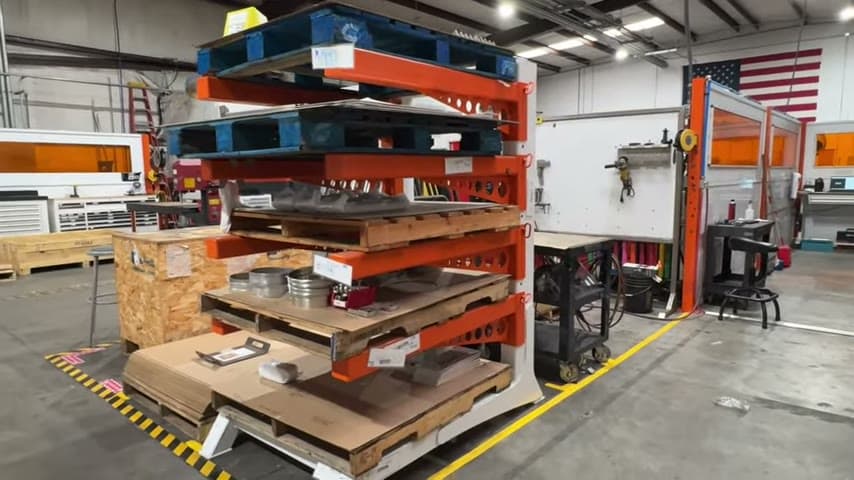
The team built modular storage racks with adjustable brackets and deliberately small openings that only fit one pallet. Laminated cards are used at the rack locations for visible information.
Make the WIP rule visible, reusable, and hard to bypass.
What is a Pallet Sized Rack Openings?
A pallet sized rack opening is a storage space designed so one pallet fits and extra material does not. The rack turns the work-in-process limit into a physical standard instead of relying on memory or judgment.
In this example, kits are completed before they go to welding. The team made the storage rack modular, with adjustable brackets that can move up or down for bigger parts while keeping the pallet based limit.
The pallet, rack opening, adjustable bracket, and laminated card all help carry the same standard at the point of use. People can reuse the proven setup instead of deciding each time how much inventory is acceptable.
Why it works
The improvement converts an inventory rule into reusable knowledge built into the storage design.
- Knowledge reuse: the rack shows the approved inventory limit without requiring each person to ask or reinterpret the rule.
- Added value: the space supports the needed handoff, a completed kit ready to move to welding.
- Mistake proofing: the opening only fits one pallet, so extra inventory is harder to create and easier to see.
- Reusable flexibility: adjustable brackets allow larger parts while preserving the same WIP control concept.
Evidence: The transcript says the racks were made modular, the brackets can adjust up and down, and the openings were made small on purpose so only a pallet fits because excess inventory is waste.
How to create this idea
- 1Choose the handoff
Pick the point where inventory must be controlled, such as completed kits waiting for welding. Define what must be complete before material enters the rack.
- 2Set the unit
Choose the allowed storage unit, such as one pallet. Make that unit the visible WIP limit.
- 3Size the opening
Build or adjust each rack opening so only the allowed pallet fits. Do not leave extra space that invites overflow.
- 4Keep it adjustable
Use adjustable brackets if part sizes change. Preserve the one pallet rule while allowing the rack to fit larger parts.
- 5Add visual information
Use laminated cards at the rack locations when the team needs kit, part, or status information. Keep the standard with the material.
- 6Review exceptions
When material does not fit, treat it as a signal to review the kit, rack setup, or WIP rule. Do not create informal overflow storage.
Best used when
- kits before welding
- pallet based flow
- WIP control
- modular racks
- visible limits
Less useful when
- no standard pallet
- irregular loads
- one off parts
- overflow allowed
Products and tools mentioned
- adjustable bracket: Used to move rack supports up or down for larger parts.
- laminated card: Used at rack locations to make information visible.
- pallet: Used as the physical capacity limit for the rack.
- storage rack: Rack for holding stock, parts, or materials in an organized layout.
Tags
- Problem
- inventoryoverproductionWIP buildup
- Lean methods
- visual managementmistake proofingWIP limit
- Application
- kittingweldingstorage
Captured from American Precision Engineering at American Precision Engineering in the video "Tour of APE's lean shop", at 00:07:16. On Lean Toolbox. Watch the original video on YouTube ↗