Standardized Incoming Boxes: Remove Shipping Cartons Before Storage
Unpack incoming items into standardized boxes so storage is repeatable, space efficient, and easy to improve.
- Creator
 UpFlip
- Company
- Joe's Gaming and Electronics
- Wastes
Incoming items kept in varied shipping cartons create inconsistent storage, use space poorly, and force people to decide case by case how each item should be stored.
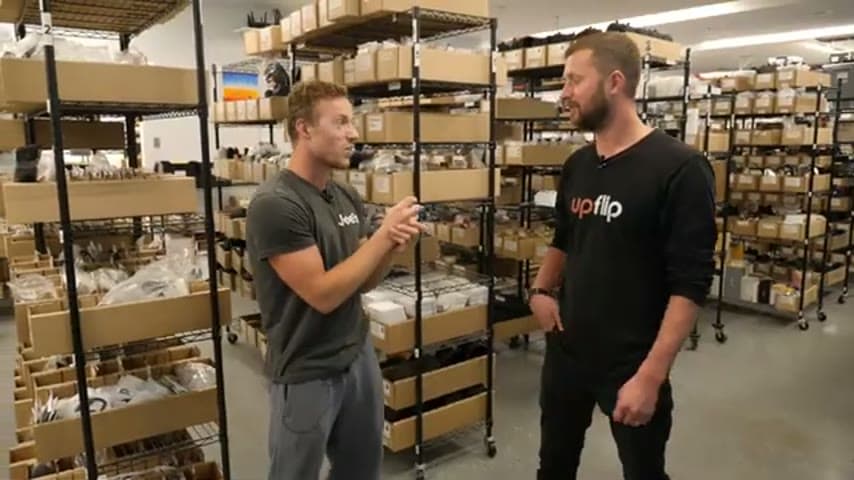
The team removes incoming items from shipping cartons and stores them in standardized boxes. In a smaller space with storage on wheels, the standard container makes it easier to fit items and move needed material quickly.
Standardize containers so proven storage methods are visible and reusable.
What is a Standardized Incoming Boxes?
A standardized incoming box system means items are removed from shipping cartons before they enter storage. Instead of keeping each supplier carton, the team transfers contents into standardized boxes that fit the way the area is organized.
The shipping carton has served its transport purpose. Once the item is received, keeping many carton sizes can add no value to the customer and can make storage harder to manage.
The standardized box becomes the reusable storage pattern. People do not need to invent a new storage choice for every incoming item, and an abnormal carton is easier to spot and correct.
Why it works
Standardized boxes reuse one proven storage method, add value by making inventory easier to manage, and mistake-proof the area by reducing random container choices.
- Reuses knowledge, so receiving does not re-solve how each incoming item should be stored.
- Removes non value added shipping cartons from the storage process after receiving.
- Makes the correct storage method obvious, which reduces inconsistent placement and missed exceptions.
- Supports tighter inventory storage because the team can improve one standard box system instead of many carton formats.
Evidence: The transcript says there is no value added in the old condition, the space is smaller, everything is on wheels, and the team wants to take items out of boxes so they can think lean and fit more in the area.
How to create this idea
- 1Select box standards
Choose a small set of standardized boxes that fit your shelves, storage positions, and wheeled storage. Do not let every shipping carton become its own storage method.
- 2Set receiving rules
Define which incoming items are removed from shipping cartons and placed into standardized boxes. Make any exceptions visible and specific.
- 3Label the boxes
Mark each standardized box with the item name, location, or quantity rule needed for correct storage. Use one label format so people do not guess.
- 4Stage boxes at receiving
Keep empty standardized boxes where incoming items are opened. Make the standard transfer the easiest next step.
- 5Remove shipping cartons
Recycle or discard shipping cartons after transfer so they do not drift back into storage. Treat any stored shipping carton as an exception to review.
- 6Improve the standard
Watch for boxes that are overfilled, underused, or confusing. Adjust the standard box set based on actual use.
Best used when
- small storage areas
- mixed incoming items
- varied shipping cartons
- mobile storage
- receiving areas
Less useful when
- sealed regulated goods
- returnable packaging
- items needing original cartons
- single item storage
Tags
- Problem
- inventorywasted spaceinconsistent storage
- Lean methods
- standard workvisual managementmistake proofing
- Application
- receivingstoragematerials
Captured from UpFlip at Joe's Gaming and Electronics in the video "Lean Manufacturing: Improve Business Efficiency & Maximize Profits (Pt. 1)", at 00:10:05. On Lean Toolbox. Watch the original video on YouTube ↗