Task Based Assembly Supply Boxes: Sort Drilling and Riveting Supplies by Job
Use labeled boxes for hand drilling, magnetic drilling, and riveting so the right supply set is visible and ready to reuse.
- Creator
 American Precision Engineering
- Company
- American Precision Engineering
- Wastes
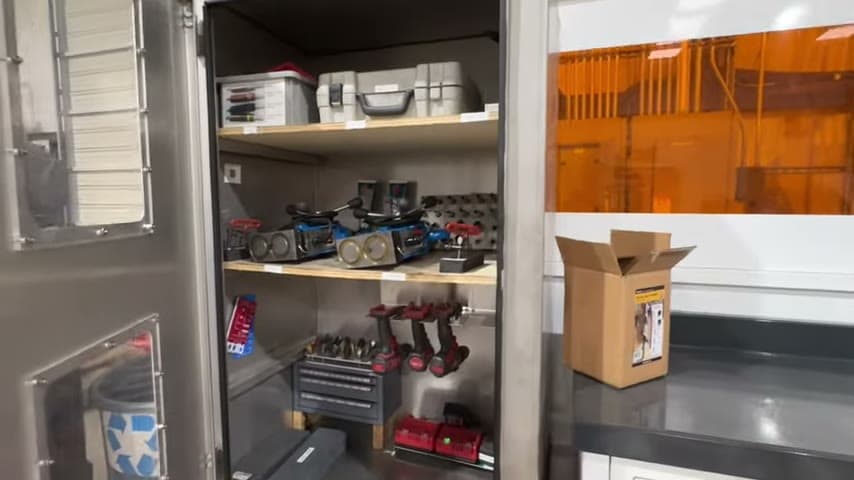
Assembly supplies for different tasks were mixed together, so people had to open boxes and decide what belonged with hand drilling, magnetic drilling, or riveting.
The team sorted supplies into separate boxes by task and put labels on the outside so the contents are known before the box is opened. Each box holds just what is needed for that task.
Make the proven supply set visible and reusable at the point of work.
What is a Task Based Assembly Supply Boxes?
A task based assembly supply box is a storage box that holds the items needed for one repeated job, such as hand drilling, magnetic drilling, or riveting. The box is organized around the work task, not a general pile of supplies.
A label on the outside shows what is inside before anyone opens it. That label captures the team's decision about what belongs in the box and helps the next person reuse the same setup.
This is a simple 5S and visual management practice. It removes unrelated items, keeps only what the task needs, and turns a good setup into a shared standard.
Why it works
The improvement works because it converts repeated setup knowledge into a visible standard that everyone can reuse.
- Knowledge reuse: each labeled box shows the proven supply set for a specific task.
- Added value: people can focus on assembly instead of re-deciding which supplies belong together.
- Mistake-proofing: separating supplies by task reduces the chance of choosing the wrong box or adding unrelated items.
- Inventory control: keeping just what is needed makes excess or missing items easier to see.
Evidence: The transcript says labels were placed on the outside so people do not have to open the box to see what is in it, and that supplies were sorted for hand drills, magnetic drills, and riveting with just what is needed.
How to create this idea
- 1Choose repeated tasks
Start with assembly tasks that regularly need their own supplies, such as hand drilling, magnetic drilling, or riveting.
- 2Define each supply set
Ask the people who do the work what each task actually requires. Remove items that do not support that task.
- 3Use one box per task
Put the needed supplies for each task into its own storage box. Keep the contents focused so the box teaches the standard setup.
- 4Label the outside
Put a clear label on the front or outside of the box. The contents should be identifiable without opening it.
- 5Maintain the standard
After use, return items to the correct task box. Adjust the contents when the work changes or when missing and unnecessary items are found.
Best used when
- repeated assembly
- shared supplies
- mixed boxes
- drilling tasks
- riveting tasks
Less useful when
- one time jobs
- single user tools
- fixed workstations
- unstable process
Products and tools mentioned
- Hand drill: Used as one category for organizing related items in labeled boxes.
- Label: Shows what is inside the box without opening it.
- Magnetic drill: Used as one category for organizing related items in labeled boxes.
- Storage box: Holds assembly items and displays the outside contents label.
Tags
- Problem
- mixed inventorysearchingwrong supplies
- Lean methods
- 5Svisual managementkitting
- Application
- assemblydrillingriveting
Captured from American Precision Engineering at American Precision Engineering in the video "Tour of APE's lean shop", at 00:10:44. On Lean Toolbox. Watch the original video on YouTube ↗