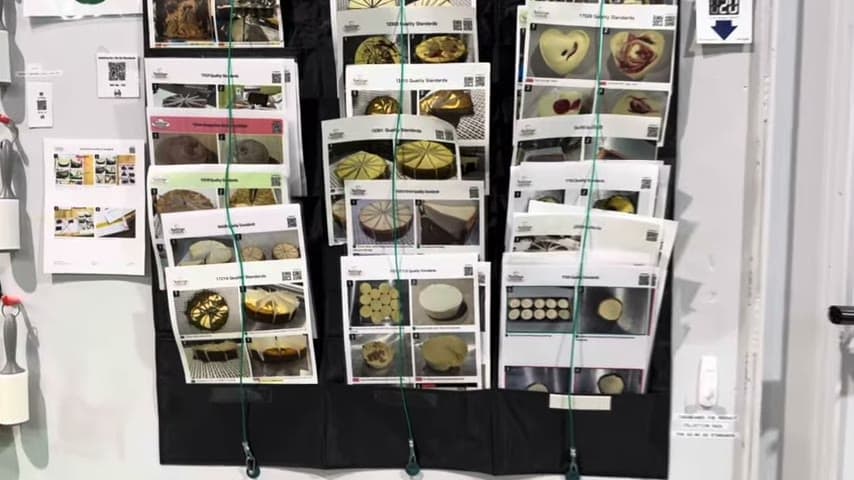
Stack Two Cut Boxes to Make Alignment Gaps Visible
Overlay two parts so misalignment shows itself before you touch the machine settings.
- Creator
 JCR Lean Ninjas
- Company
- JCR Lean Ninjas
- Wastes
Small boxes on the Fox machine were not printing or cutting square, but the out-of-square error was hard to see on a single part, so operators struggled to judge how much to adjust.
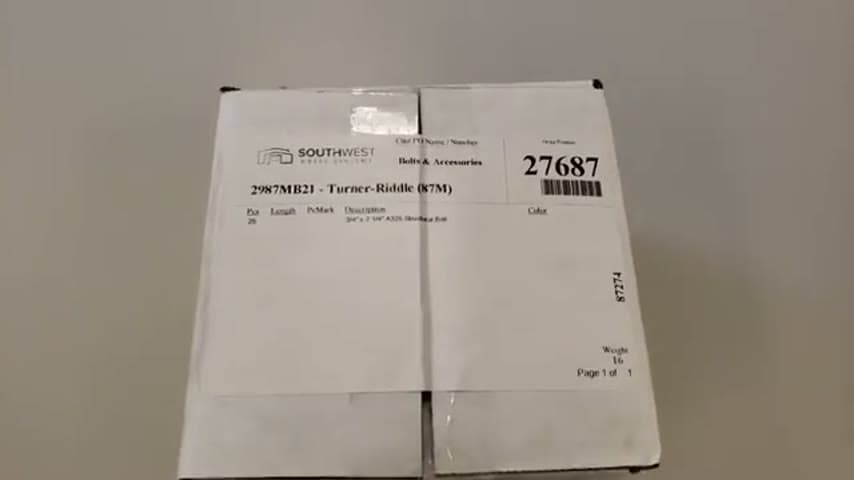
The operator stacked two cut boxes on top of each other so the mismatch between edges showed up as a visible gap, making the alignment error obvious before any adjustment was made.
Make the defect visible by comparison so the correction is guided by evidence, not guesswork.
What is a Stack Two Cut Boxes to Make Alignment Gaps Visible?
This is a simple visual check for squareness and alignment. Instead of eyeballing a single cut box, you place two finished parts one on top of the other. If the parts are square and consistent, the edges line up flush. If they are not, the offset appears as a clear gap you can see and even measure.
Stacking turns a small, hard-to-detect error into an amplified, obvious signal. Two identical parts should overlay perfectly, so any deviation is doubled and easy to spot at a glance.
Here it was used at the Fox machine to diagnose small boxes that were not cutting square, giving the operator a clear read on the problem before making machine adjustments.
Why it works
It captures a proven diagnostic method that anyone can repeat, so a hard-to-see defect becomes a shared, obvious signal.
- Amplifies a subtle out-of-square error into a visible gap anyone can judge.
- Turns a personal knack for spotting misalignment into a repeatable check others can copy.
- Guides the adjustment with evidence so operators do not over-correct or guess.
- Catches defects before more bad boxes run, preventing scrap and rework.
How to create this idea
- 1Pull two sample parts
Take two boxes cut in the current setup from the same run.
- 2Stack them aligned
Place one directly on top of the other, matching the same edges and orientation.
- 3Look for the gap
A flush overlay means square; any visible offset or gap shows the direction and size of the error.
- 4Adjust to close the gap
Make the machine adjustment aimed at eliminating the visible gap, then re-stack to confirm.
- 5Confirm before the run
Repeat the stack check on fresh parts until edges line up before running full production.
Best used when
- cutting square parts
- hard-to-see misalignment
- before machine adjustment
- repeatable die-cut parts
Less useful when
- one-off parts
- no reference part
- errors already obvious
Tags
- Problem
- out of squaremisalignmentdefects
- Lean methods
- visual checkmistake proofingstop and check
- Application
- box makingdie cuttingprint alignment
Captured from JCR Lean Ninjas at JCR Lean Ninjas in the video "Stop and Fix at the box machine.", at 00:00:05. On Lean Toolbox. Watch the original video on YouTube ↗