Visual Quality Standards Posted at the Workstation
Show good vs bad examples right where the work happens so operators judge quality the same way every time.
- Creator
 WillytheMinimalist
- Company
- Tennessee Cheesecake
- Wastes
Operators rely on memory or judgment to decide if a part passes, which leads to inconsistent calls and defects slipping through.
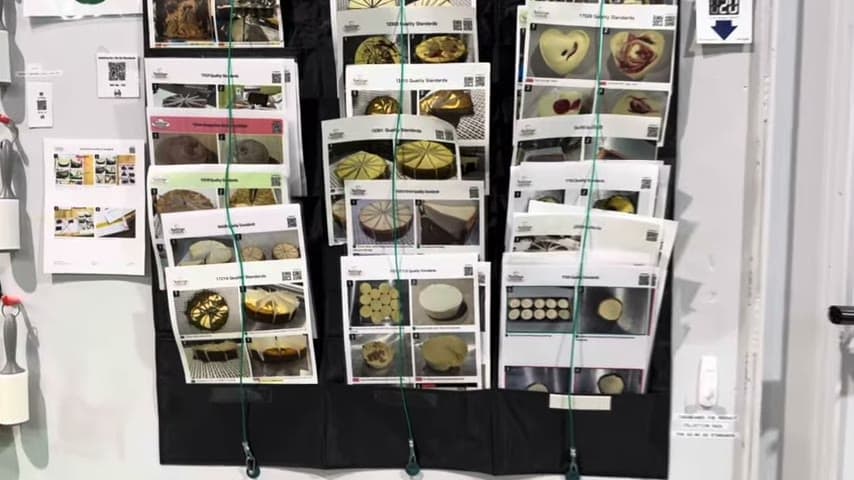
The shop posted clear visual quality standards throughout the floor, including good and bad examples showing exactly what acceptable work looks like, built and displayed using Gimadocs software.
Make the quality standard visible at the point of work so every operator judges the same way.
What is a Visual Quality Standards Posted at the Workstation?
A visual quality standard is a posted reference, often a photo or sample, that shows what a good part looks like next to what a bad part looks like. It lives at the workstation where inspection happens, not in a binder or a training manual.
Instead of asking an operator to remember a tolerance or a spec, the standard puts the decision in front of them. They compare the part to the picture and pass or fail it in seconds.
Here the team used Gimadocs to create and display these standards everywhere throughout the shop, pairing each quality point with clear good and bad images so the answer to 'what does acceptable look like?' is always on the wall.
Why it works
It captures one correct quality judgment and makes it reusable by everyone on every shift.
- Turns a supervisor's expertise into a posted reference anyone can use.
- Removes guesswork, so two operators grade the same part the same way.
- Catches defects at the source before they move downstream.
- New hires ramp faster because the standard trains them at the point of use.
How to create this idea
- 1Pick the quality checks that matter
Identify the inspection points where operators most often disagree or where defects escape.
- 2Capture good and bad examples
Photograph or sample an acceptable part and a clearly defective one for each check.
- 3Build the standard in software
Use a tool like Gimadocs to lay out each check with its good and bad images and a short caption.
- 4Post it at the point of work
Mount the standard at the workstation where that inspection actually happens, not in an office.
- 5Keep it current
Update the reference when the spec or the product changes so it never drifts from reality.
Best used when
- visual inspection tasks
- subjective pass fail calls
- high operator turnover
- recurring defects
Less useful when
- fully automated inspection
- purely dimensional gauging
- one off custom jobs
Tags
- Problem
- defectsinconsistent qualityunclear specs
- Lean methods
- visual managementstandard workmistake proofing
- Application
- quality controlshop floorinspection
Captured from WillytheMinimalist at Tennessee Cheesecake in the video "Tennessee Cheesecake Lean Tour", at 00:05:07. On Lean Toolbox. Watch the original video on YouTube ↗