Hose Storage Hook: Wrap Unused Hoses Off the Floor to Prevent Trips
A simple hook gives idle hoses a visible home so the bench stays usable and the floor stays clear.

- Creator
- Hunter Trim & Cabinets
- Company
- Hunter Trim & Cabinets
- Wastes
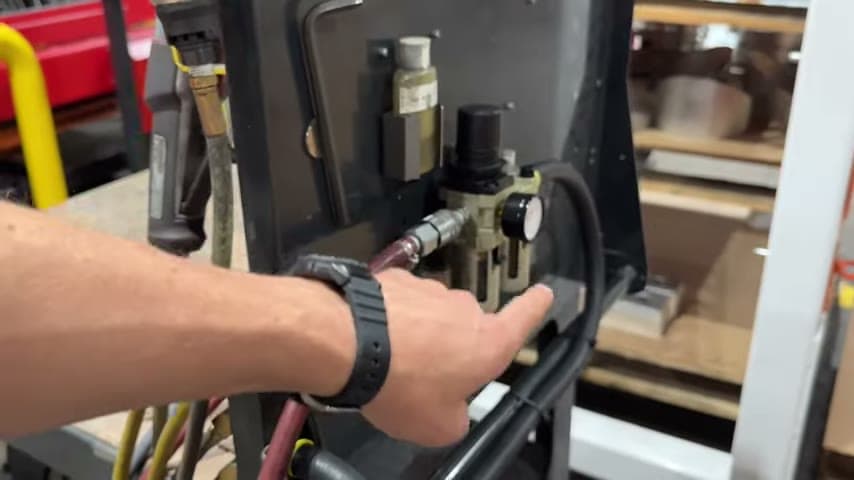
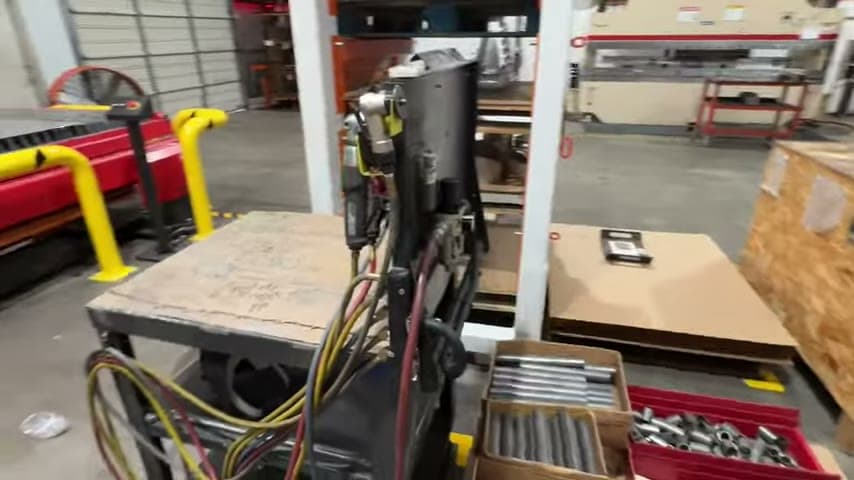
Hoses were left on the floor near a bench when not in use. Someone almost tripped over them, showing that the loose hose length had become a safety risk.
The team added a hook so the hoses can be wrapped up when idle, keeping the needed length available while removing the trip hazard from the floor.
Make the safe storage method visible, easy, and repeatable.
What is a Hose Storage Hook?
A hose storage hook is a fixed place to wrap and hold a hose when the full length is not being used. It turns loose hose slack into a clear storage standard.
In this case, the team still needed the hose length for work at the bench. The improvement did not remove the hose or reduce its usefulness, it created a better resting condition between uses.
The hook also acts as mistake-proofing. When the hose is on the hook, anyone can see that it is stored correctly, and the floor is no longer the default place for unused hose length.
Why it works
This works because a proven safe condition is made visible and reusable at the exact place where the problem occurs.
- Knowledge reuse: after one near miss, the team turns the lesson into a repeatable standard instead of relying on people to remember the hazard.
- Added value: the hose stays available for bench work while unused length is controlled and kept out of the way.
- Mistake-proofing: the hook gives the hose an obvious home, making the correct action easier than leaving it on the floor.
Evidence: The transcript says someone almost tripped over the hoses, and the follow-up shows a hook added so the hoses can be wrapped up off the floor when not in use.
How to create this idea
- 1Find loose lines
Look for hoses, cords, or cables that are needed for work but often sit on the floor when idle.
- 2Confirm the use case
Ask whether the full length is needed during the job. If it is, store only the unused length between uses instead of removing the hose.
- 3Place the hook
Install a utility hook close to the point of use so wrapping the hose is quick and obvious.
- 4Set the standard
Agree that the hose goes on the hook whenever it is not being used. The correct condition should be visible at a glance.
- 5Check and adjust
If the hose returns to the floor, move the hook closer, change the hook type, or simplify the wrap so the standard is easier to follow.
Best used when
- loose hoses
- bench work
- trip hazards
- shared areas
Less useful when
- constant hose use
- no mount point
- temporary setup
- hose must stay straight
Products and tools mentioned
- Hose: Flexible tubing used to convey air, fluid, or coolant on the shop floor.
- Utility hook: Used as the fixed storage point for wrapping unused hose length off the floor.
Tags
- Problem
- trip hazardfloor cluttersafety risk
- Lean methods
- 5Svisual managementmistake proofing
- Application
- workbenchhose storageshop floor
Captured from Hunter Trim & Cabinets at Hunter Trim & Cabinets in the video "Lean Improvements 8/7/26", at 00:02:03. On Lean Toolbox. Watch the original video on YouTube ↗