One Minute Dust Collector Shutoff Delay: Keep Extraction Running After Blowdown
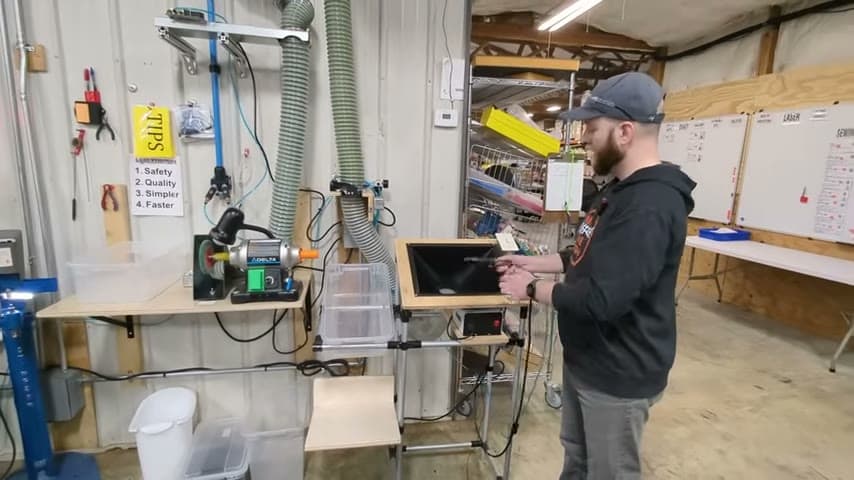
A timed off delay keeps dust collection running long enough to clear dust after parts are blown off with an ionizing air gun.
- Creator
 Audacity Micro
- Company
- Henry Holsters
- Wastes
If dust collection shuts off the moment blowdown ends, dust can remain in the system or around the parts, creating contamination defects and extra cleanup or waiting.
The team used one switch to charge the ionizing air gun, turn on the dust collector, and open the dust collection gate. When the switch is turned off, a one minute timer keeps the dust collector running so it can finish drawing dust through the system before it shuts off.
Build proven process timing into the equipment so the right sequence happens every time.
What is a One Minute Dust Collector Shutoff Delay?
A one minute dust collector shutoff delay is an off delay timer added to a blowdown station. The station uses an ionizing air gun to kill static charge on plastic parts while dust is blown down into dust collection.
One switch starts the required functions together: the ionizing air gun, the dust collector, and the dust collection gate. This makes the correct startup sequence visible and repeatable.
When the operator switches the station off, the timer keeps the dust collector running for one more minute. That delay captures the learned best practice that dust collection should continue long enough to finish drawing dust through the system.
Why it works
The improvement reuses process knowledge by turning the correct blowdown and shutdown sequence into an automatic control, adding value through cleaner parts and mistake-proofing the operator step.
- Knowledge reuse: the required timing is built into the station instead of depending on each operator to remember it.
- Added value: the ionizing air gun and dust collector support the work of removing static and dust from plastic parts.
- Mistake-proofing: the off delay prevents immediate dust collector shutoff after blowdown.
- Defect prevention: continued extraction reduces the chance that dust remains in the system or on parts after the process ends.
Evidence: The transcript states that the switch charges the gun, turns on the dust collector, and opens the gate, and that a one minute timer keeps dust collection cycling to finish drawing dust through the system before shutoff.
How to create this idea
- 1Define the sequence
Write the correct station sequence: remove static, blow parts down into collection, keep extraction running briefly, then shut down.
- 2Combine required starts
Use one switch to activate the ionizing air gun, dust collector, and dust collection gate together so a required function is not skipped.
- 3Add an off delay
Install a timer on the dust collector control so it continues running after the switch is turned off. Set the delay to the time needed to clear dust through the system.
- 4Test with real work
Run typical plastic parts through the station and confirm dust continues to be drawn away after blowdown stops.
- 5Label the behavior
Mark the station so operators know the dust collector will keep running briefly after shutoff and should not be bypassed.
Best used when
- plastic part blowdown
- static control
- dust collection
- repeat contamination
Less useful when
- no dust source
- always on extraction
- wet cleaning
- single use setup
Products and tools mentioned
- Dust collector: System capturing dust and debris from machines to keep air clean.
- Electrical switch: Provides one start action for the buffer and dust collector.
- Ionizing air gun: Neutralizes static charge on plastic parts during blowdown.
- Timer: Keeps dust collection running for one minute after the switch is turned off.
- blast gate: Opens the dust collection path for the blowdown station.
Tags
- Problem
- dustdefectswaiting
- Lean methods
- mistake proofingstandard workknowledge reuse
- Application
- dust collectionblowdownplastic parts
Captured from Audacity Micro at Henry Holsters in the video "THIS is what a LEAN shop looks like - Lean Machine Shop Tour", at 00:16:46. On Lean Toolbox. Watch the original video on YouTube ↗