Store Screws in Original Supplier Boxes to Eliminate Double-Handling
Keep purchased fasteners in their supplier packaging on the rack instead of decanting them into bins and repacking later.
- Creator
 TheAMEConnect
- Improvement date
- June 16, 2024
- Company
 Southwest Steel Buildings
- Wastes
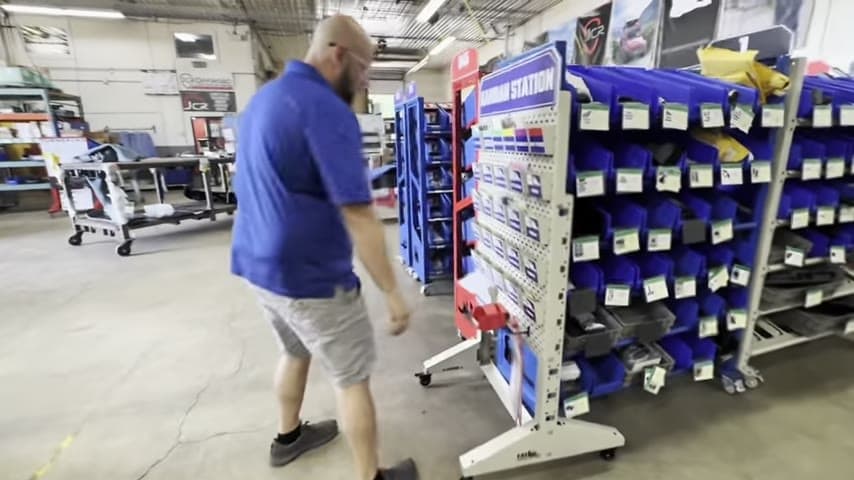
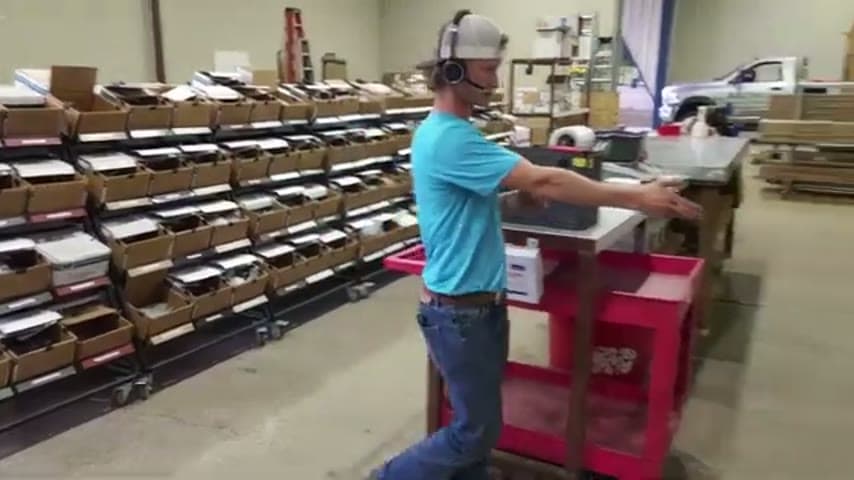
Screws arrived in supplier boxes but were dumped into stocking bins, then taken back out of the bins and repacked into boxes for use. This double-handling added two extra touches with no value, plus long walks between the old screw room and the shipping area.
The team stopped decanting. Supplier boxes now stay sealed on the rack until they are needed, so the fasteners are handled once instead of being unpacked, binned, and repacked.
Handle material once; every extra touch that does not add value is waste.
What is a Store Screws in Original Supplier Boxes to Eliminate Double-Handling?
This is a point-of-storage decision that removes two non-value-adding steps from the material flow. The parts stay in the packaging the supplier already provided, and that packaging becomes the storage container and the pick container at the same time.
The old process broke one delivery into three handlings: take screws out of the boxes, put them into bins for stocking, then pull them back out of the bins and put them back into boxes to package. Each transfer risked spills, miscounts, and mixed part numbers.
By leaving screws in their original supplier boxes on the rack, the count and the label the supplier printed travel with the part all the way to the point of use. Nothing is repacked and nothing is re-labeled.
Why it works
Keeping supplier packaging intact preserves the information and protection the supplier already built in, and makes that a reusable standard for every fastener line.
- The supplier count and part label stay with the parts, so quantity and identity are always visible and verifiable.
- One handling instead of three removes two chances to miscount, mix, or spill parts.
- The original box is a proven, standardized container, so no local repacking rules need to be invented or maintained.
- Anyone can find and confirm a part from the supplier label rather than an internal bin, reducing knowledge held in one person's head.
How to create this idea
- 1Map the current fastener flow
Trace each fastener from receiving to point of use and mark every time it is unpacked, decanted, or repacked.
- 2Flag redundant repacking
Identify where parts are moved from supplier box to bin and later back into a box for use. That round trip is the target.
- 3Rack the supplier boxes directly
Size shelving so unopened supplier boxes sit on the rack and stay there until picked.
- 4Rely on the supplier label
Use the supplier's printed count and part number as the storage and pick identifier instead of relabeling into internal bins.
- 5Locate storage near the point of use
Place the rack close to where the screws are consumed to cut the long walk that existed between the old screw room and shipping.
Best used when
- small fasteners in boxes
- supplier packs count accurately
- repacking adds no value
- clear supplier labeling
Less useful when
- parts need mixing or kitting
- supplier packs oversized
- damaged or unlabeled packaging
- repackaging is customer requirement
Tags
- Problem
- double-handlingrepackingoverprocessing
- Lean methods
- waste eliminationpoint of usesingle handling
- Application
- fastenersstockroommaterial storage
Captured from TheAMEConnect at Southwest Steel Buildings in the video "AME 2 Second Lean Tour: Southwest Steel Buildings", at 00:18:45. On Lean Toolbox. Watch the original video on YouTube ↗