Ionizing Air Gun Blow Down Station: Neutralize Static While Sending Dust to Collection
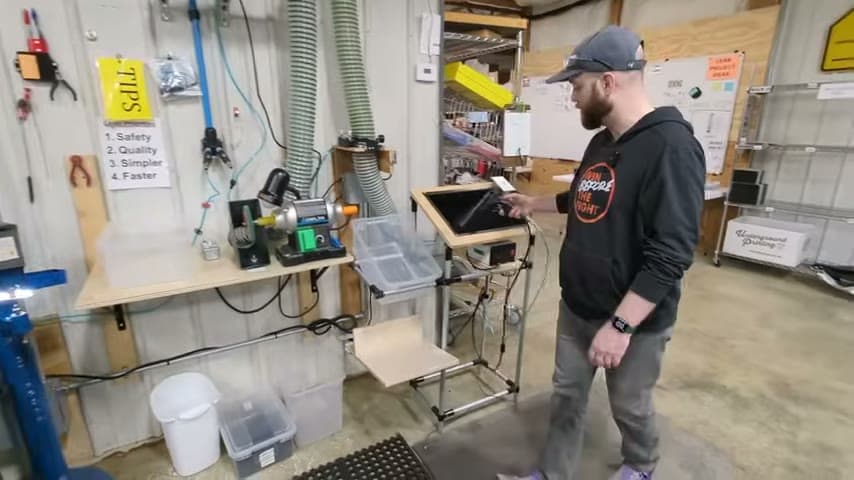
A dedicated blow down station uses an ionizing air gun, dust collector, switch, and blast gate so plastic parts release dust the same way every time.
- Creator
 Audacity Micro
- Company
- Henry Holsters
- Wastes
After touch-up buffing, plastic parts can hold a static charge that keeps dust on the surface. Ordinary blow off may not remove the cause, which can leave dust defects and create extra cleaning.
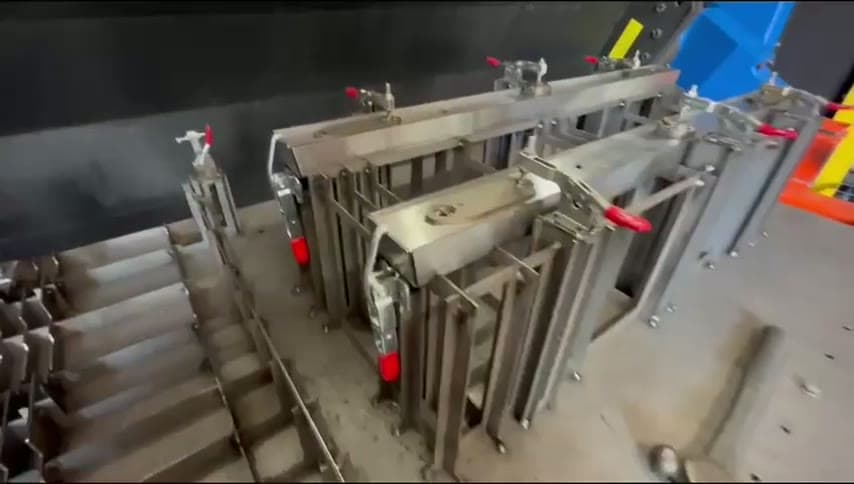
The team uses a blow down station with an ionizing air gun. One switch charges the gun, turns on the dust collector, and opens the collection gate so static is neutralized while dust is removed from the part.
Make the proven defect prevention method visible, repeatable, and hard to skip.
What is a Ionizing Air Gun Blow Down Station?
An ionizing air gun blow down station is a fixed cleaning point for parts that hold static, especially plastic parts after buffing or touch-up work. The ionizing air gun kills the static charge while the air stream removes dust.
In this example, the station is connected to dust collection. A single switch charges the ionizing air gun, turns on the dust collector, and opens the blast gate, so the operator uses the full cleaning method instead of a plain air blast.
The station turns a quality-sensitive cleanup step into standard work. It captures the knowledge that static must be neutralized for dust removal to work well on plastic parts.
Why it works
The improvement makes a proven cleaning solution reusable at the exact point where static-related defects can occur.
- Knowledge reuse: operators do not have to rediscover that static must be neutralized before dust will release from plastic parts.
- Added value: the step improves the part condition by removing dust before it moves to the next process.
- Mistake-proofing: one switch starts the ionizing air gun, dust collector, and gate together, reducing the chance that part of the method is skipped.
- Standard work: a dedicated station makes the expected cleanup method visible to new and experienced operators.
Evidence: The transcript states that the blow down station has an ionizing air gun on a circuit that kills the static charge on plastic parts, and that the switch charges the gun, turns on the dust collector, and opens the gate.
How to create this idea
- 1Find the static defect
Look for plastic parts where dust remains or returns after buffing, trimming, or handling. Confirm that static cling is part of the problem.
- 2Set a fixed station
Place the ionizing air gun where the blow down work already happens. Make it clear that this station is for static neutralizing, not just air blowing.
- 3Connect dust collection
Route the blow down area to a dust collector. Use a blast gate so the collection point is active when the station is in use.
- 4Use one switch
Tie the switch to the critical actions where practical: charge the ionizing air gun, start the dust collector, and open the gate. This makes the proven method easier to repeat.
- 5Label the purpose
Mark the station with the reason for the method: kill static, then remove dust. This helps the knowledge transfer to new people and similar parts.
Best used when
- plastic parts
- static cling
- buffing dust
- pre-assembly cleaning
- finish cleanup
Less useful when
- non-static materials
- wet cleaning required
- no dust source
- no dust collection
Products and tools mentioned
- Dust collector: System capturing dust and debris from machines to keep air clean.
- Electrical switch: Provides one start action for the buffer and dust collector.
- Ionizing air gun: Neutralizes static charge on plastic parts during blowdown.
- blast gate: Opens the dust collection path for the blowdown station.
- grommets: Metal eyelets, described as grommets, are installed after cooling.
- kick press: Used after cooling to install metal eyelets or grommets.
- plastic mesh: Used as part of the cooling rack described in the transcript.
- plywood: Layered wood panel used for fixtures, crates, and shop construction.
- sheet metal: Used as part of the cooling rack described in the transcript.
Tags
- Problem
- defectsstatic clingdust
- Lean methods
- mistake proofingstandard workknowledge reuse
- Application
- plastic partsfinishingdust collection
Captured from Audacity Micro at Henry Holsters in the video "THIS is what a LEAN shop looks like - Lean Machine Shop Tour", at 00:16:31. On Lean Toolbox. Watch the original video on YouTube ↗