Point-to-Point Laser-Cut Joints: Remove Weld Slots to Reduce Weld Weave
Capture better joint fit in the cut file so welders do not have to compensate for avoidable gaps.
- Creator
 JCR Lean Ninjas
- Company
- JCR Lean Ninjas
- Wastes
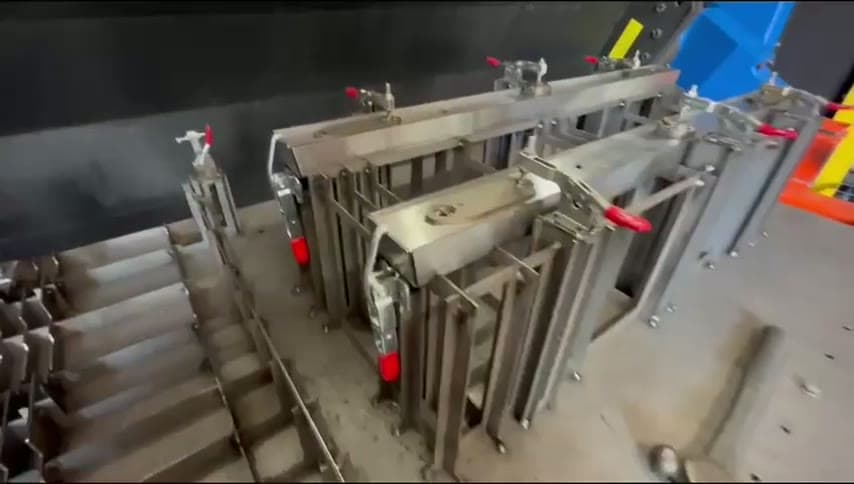
Laser-cut weld slots left joints that did not meet point-to-point, creating extra weld weave and increasing the chance of inconsistent fit-up or weld defects.
The team exported the parts through Radan, adjusted the K factor for the laser export, and removed the slots so the joints meet point-to-point.
Make proven fit-up knowledge reusable in the design file.
What is a Point-to-Point Laser-Cut Joints?
A point-to-point laser-cut joint is a joint design where the mating parts meet at the intended contact points after cutting, instead of leaving a slot or gap that the welder must bridge.
In this improvement, the slots were removed from the laser-cut parts. The parts were exported through Radan, which the speaker says adjusts the K factor for the physical export sent to the laser.
The improvement moves the learning into the file, not just into the welder's technique. Future parts can start with the corrected geometry, so the team does not keep re-solving the same fit-up problem.
Why it works
This works because the better joint design becomes reusable knowledge in the cut data, reducing non-value-added welding compensation and making the fit harder to get wrong.
- Knowledge reuse: the corrected joint geometry is stored in the part file for future laser exports.
- Added value: welding effort goes into joining the parts, not filling avoidable slots.
- Mistake-proofing: point-to-point fit-up reduces the need for each welder to choose a different weave to close the gap.
- Process learning: adjusting the K factor connects the design export to the real laser-cut result.
Evidence: The speaker says the parts were exported through Radan, the K factor was adjusted for the laser export, and the joints are now point-to-point after removing the slots.
How to create this idea
- 1Find gap-prone joints
Look for laser-cut weldments where operators weave to fill a slot or poor fit-up. Start with repeat parts or part families.
- 2Check slot purpose
Review whether each slot adds a needed function, such as clearance or location, or only creates a weld gap.
- 3Update the file
Remove non-value-added weld slots so mating parts meet point-to-point. Make the change in the source design, not as a one-time shop workaround.
- 4Control the export
Use Radan or your normal CAM process to apply the correct K factor before sending the file to the laser. Treat the export method as part of the standard.
- 5Cut and verify
Run a sample and confirm the joint fit before full release. Ask the welder whether the required weave was reduced.
- 6Reuse the rule
Document the before and after joint design. Apply the same point-to-point rule to similar laser-cut weldments.
Best used when
- laser-cut weldments
- repeat parts
- weld gaps
- excessive weave
- fit-up variation
Less useful when
- slots are functional
- one-off work
- unverified K factor
- unknown weld requirement
Tags
- Problem
- defectsoverprocessingweld gaps
- Lean methods
- mistake-proofingknowledge reusestandard work
- Application
- laser cuttingweldingfabrication
Captured from JCR Lean Ninjas at JCR Lean Ninjas in the video "Make the fixture eliminate defects! AMR cart welding improvements.", at 00:00:55. On Lean Toolbox. Watch the original video on YouTube ↗