Silverware Kanban Card Holders: Keep Refill Signals Visible and Organized
Dedicated holders keep silverware Kanban cards at the point of use so refilling is easier to understand and less error prone.

- Creator
- Hunter Trim & Cabinets
- Company
- Hunter Trim & Cabinets
- Wastes
The silverware Kanban cards did not have holders, so refill signals could be loose, hidden, or inconsistent. Some cards were also in an old format, which made the standard harder to reuse correctly.
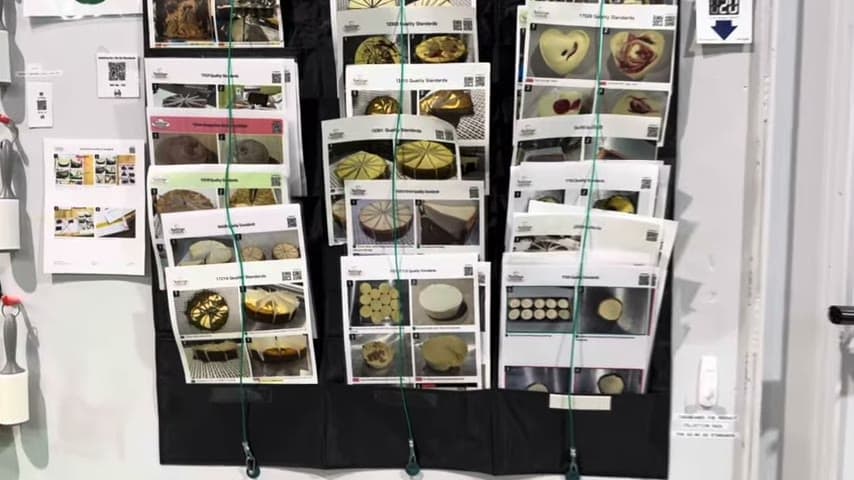
The team added holders for all silverware Kanban cards. While installing them, they noticed the cards were in an old format and began updating them, making the refill area easier to use.
Make replenishment knowledge visible and reusable at the point of use.
What is a Silverware Kanban Card Holders?
A silverware Kanban card holder is a fixed pocket or mount for the card that controls a refill location. Instead of loose cards, each Kanban card has a visible home near the silverware it supports.
The holder turns the card into point of use knowledge. Anyone refilling the area can see the signal, use the same standard, and return the card to the right place.
In this improvement, adding holders also revealed that some cards were still in an old format. Making the cards visible made it easier to see and correct the standard.
Why it works
The improvement works because it makes proven replenishment knowledge visible, reusable, and easier to verify before work is done.
- Knowledge reuse: A fixed holder keeps the Kanban card in the same place every time, so each person can reuse the existing refill rule instead of figuring it out again.
- Added value: The person refilling can focus on placing the silverware correctly rather than searching for loose cards or interpreting mixed formats.
- Mistake-proofing: Missing, misplaced, or outdated cards become easier to see, which reduces the chance of using the wrong signal or skipping a refill need.
- Standard maintenance: Installing holders creates a simple audit point for old formats, unclear cards, and other follow-up fixes.
Evidence: The transcript says the Kanban cards did not have holders, then says all of the Kanbans have holders. While adding them, the team noticed the cards were in the old format and said the space was much easier to refill.
How to create this idea
- 1Find every card
Walk the refill area and list each Kanban card used for silverware or similar supplies. Note which cards are loose, hidden, or hard to match to an item.
- 2Add fixed holders
Install one card holder for each Kanban card. Put it where the card can be seen at the refill location without searching.
- 3Match card to item
Place each card beside the silverware or supply it controls. The connection should be clear to someone who does not normally do the refill.
- 4Check the format
Review each card while placing it in a holder. Update old formats or unclear information before the area is considered complete.
- 5Test the refill
Ask someone to refill the silverware using the visible cards. If they hesitate, move the holder or improve the card wording.
Best used when
- loose Kanban cards
- shared supplies
- refill stations
- mixed card formats
- point of use stock
Less useful when
- digital only Kanban
- no refill signal
- single use items
- rarely refilled areas
Products and tools mentioned
- Boxes: Cut so silverware could be grabbed and placed during refill.
- Card holders: Used to give each silverware Kanban card a fixed, visible home.
- Kanban cards: Signal cards that trigger material replenishment when inventory reaches a set point.
- Silverware: The items being replenished in the refill area.
Tags
- Problem
- lost cardsold standardsrefill errors
- Lean methods
- Kanbanvisual managementmistake proofing
- Application
- replenishmentcafeteriapoint of use
Captured from Hunter Trim & Cabinets at Hunter Trim & Cabinets in the video "Lean Improvements 7/31/26", at 00:05:18. On Lean Toolbox. Watch the original video on YouTube ↗