Deburr Cart Floor Lock and Floor Home: Keep the Cart Parked in Its Standard Place
A floor lock and visible floor home let a mobile deburr cart move for cleaning, then return to the same reliable setup.
- Creator
 American Precision Engineering
- Company
- American Precision Engineering
- Wastes
A mobile deburr cart can drift to different places after use or cleaning, making it unclear where the cart, tools, and consumables belong.
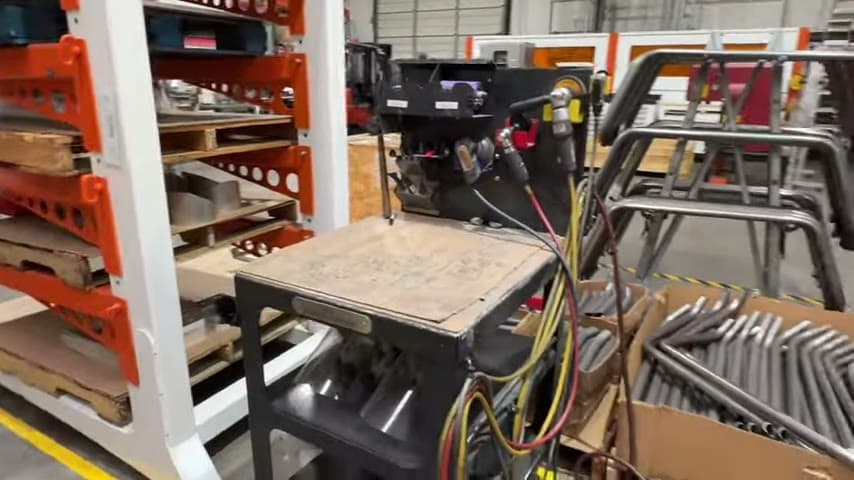
The team used a standard cart design, kept needed items such as the Allen wrench and oiler on the cart, added a floor lock, and gave the cart a defined home on the floor so it can be returned to the same place after cleaning.
Make the proven setup visible, fixed, and easy to reset.
What is a Deburr Cart Floor Lock and Floor Home?
A deburr cart floor home is a defined parking location for a mobile deburr cart. The cart holds the tools and consumables needed for the job, including the Allen wrench used to open the oiler.
A floor lock holds the cart in place when it is parked. The floor home shows where the cart belongs after it is moved, cleaned, or reset.
Together, the floor lock and floor home turn a movable cart into a repeatable workstation. The team can clean the area in the morning, then put the cart back where it goes so the next user finds the same known setup.
Why it works
This works because the standard cart setup becomes visible and reusable instead of depending on memory or personal preference.
- Knowledge reuse: The deburr cart is based on the team's standard carts, so a proven cart pattern can be reused instead of redesigned.
- Added value: The Allen wrench, oiler, tools, and consumables stay at the point of use, so the cart supports the work directly.
- Mistake-proofing: The floor home shows the correct parked position, and the floor lock helps keep the cart stable once it is returned.
Evidence: The transcript says the deburr cart is based on standard carts, has a floor lock, has a home on the floor, and can be moved for morning cleaning before being put back where it goes.
How to create this idea
- 1Use a standard cart
Start with a cart design your team already uses successfully. Keep the layout simple enough to repeat on other carts.
- 2Stage needed items
Put the required tools and consumables on the cart. In this example, the Allen wrench and oiler are kept where they are needed.
- 3Add a floor lock
Install a floor lock so the cart can be held in place during use. Make it easy to engage and release.
- 4Define the floor home
Mark or otherwise define the exact place where the cart belongs. The correct location should be clear without asking.
- 5Reset after cleaning
Include the cart in the daily cleanup routine. Move it to clean the area, then return it to its floor home and lock it in place.
Best used when
- mobile work carts
- shared tooling
- point of use supplies
- daily cleanup
- standard carts
Less useful when
- fixed benches
- temporary layouts
- rarely moved equipment
- single user setups
Products and tools mentioned
- Allen wrench: Stored beside the oiler because it is needed to open the oiler top.
- Floor lock: Keeps the mobile cart parked in place at its floor home.
- Oiler: Kept at the work area as the place where oil is added for tool care.
- Utility cart: Wheeled cart for moving tools, parts, or materials between workstations on the shop floor.
Tags
- Problem
- cart driftpoor resetmissing tools
- Lean methods
- 5Svisual managementstandard workpoint of use
- Application
- deburringtool cartscleanup
Captured from American Precision Engineering at American Precision Engineering in the video "Tour of APE's lean shop", at 00:06:28. On Lean Toolbox. Watch the original video on YouTube ↗