Pallet Liner Point of Use Storage: Put Liners Where Incoming Pallets Start
Store pallet liners at the first pallet start point so each incoming pallet gets the required liner before it moves through the shop.
- Creator
 American Precision Engineering
- Company
- American Precision Engineering
- Wastes
When pallet liners are not stored where pallets begin, the liner step depends on memory and can be missed before the pallet routes through the shop.
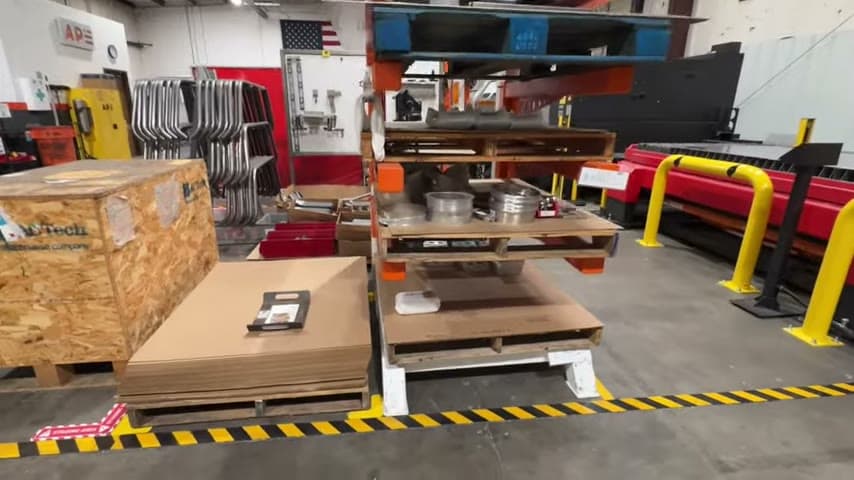
The team put pallet liners at the first place a pallet starts, so when a pallet comes in, the liner goes on immediately.
Make the required standard visible at the point where the work starts.
What is a Pallet Liner Point of Use Storage?
Pallet liner point of use storage means keeping pallet liners directly at the location where incoming pallets first enter the process. The location itself communicates the standard: each pallet gets a liner when it starts.
This is a small visual control and mistake proofing method. Instead of storing the liners somewhere separate and relying on people to remember the rule, the supply is placed at the decision point.
In the same area, racks are used to show where parts are in the process, such as ready to go to welding. The pallet liner location uses the same idea: placement communicates status and the next correct action.
Why it works
The improvement reuses process knowledge by making the required pallet setup visible and repeatable at the first pallet location.
- Adds value by helping each pallet start with the required liner before it moves downstream.
- Mistake proofs the start of the route by making the liner hard to overlook when a pallet arrives.
- Turns a remembered rule into a visible standard that new or rotating workers can copy.
- Prevents people from re-solving the same question of where liners are kept and when they should be applied.
Evidence: The transcript says this is mostly the first place they start with a pallet, most things route through the shop on a pallet, and they put the pallet liners there so when a pallet comes in the liner goes there.
How to create this idea
- 1Find the pallet start
Identify the first physical place where incoming pallets begin their route. Use the actual start point, not the nearest open storage space.
- 2Define the rule
State the standard in simple words, such as each incoming pallet gets one liner. Make it clear when the liner is added.
- 3Store liners there
Place the pallet liner supply at the pallet start point. Keep it visible and separate from unrelated materials.
- 4Label the location
Mark the liner location so anyone can see what belongs there. If stockouts happen, add a simple reorder or minimum quantity signal.
- 5Confirm in the flow
Watch a few pallets enter the process and verify the liner is added before the pallet moves on. Adjust the location if people still miss the step.
Best used when
- palletized flow
- required liner step
- shared start point
- repeat routing
Less useful when
- no fixed start
- rare liner use
- many exceptions
Products and tools mentioned
- pallet: Used as the physical capacity limit for the rack.
- pallet liner: Stored at the pallet start point so each incoming pallet gets one.
- storage rack: Rack for holding stock, parts, or materials in an organized layout.
Tags
- Problem
- missed stepinconsistent prepprocess errors
- Lean methods
- point of usevisual managementmistake proofing
- Application
- material flowpallet handlingshop floor
Captured from American Precision Engineering at American Precision Engineering in the video "Tour of APE's lean shop", at 00:07:55. On Lean Toolbox. Watch the original video on YouTube ↗