Laminated SOPs Stored at the Saw for Instant Refreshers
Photo and written work instructions live at the machine so anyone can self-serve the answer.
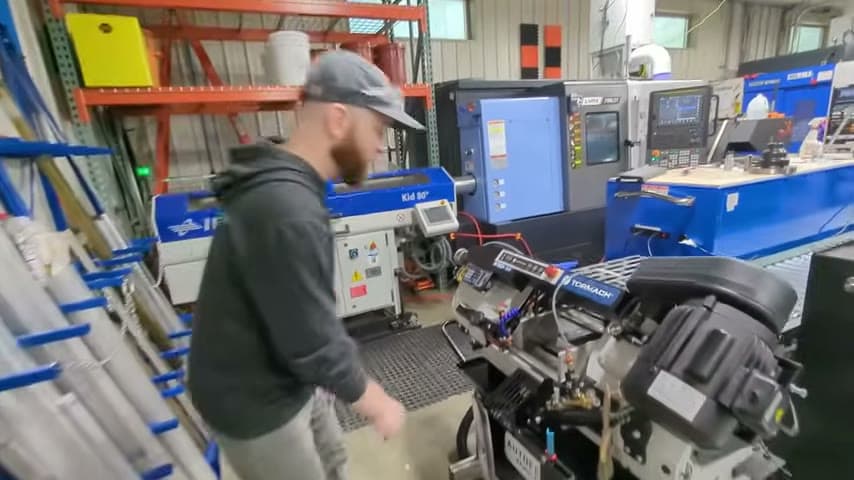
- Creator
 Audacity Micro
- Company
- Henry Holsters
- Wastes
When operators forget a step at the saw, they have to track down the one person who knows and interrupt them, stalling both people.
The team wrote out every saw SOP with photos and text, laminated the sheets, and stored them right at the saw, along with magnet trays for a tape measure and calculator.
Put standard work where the work happens so knowledge is reusable without asking an expert.
What is a Laminated SOPs Stored at the Saw for Instant Refreshers?
A point-of-use SOP is a standard operating procedure kept physically at the workstation it describes, not filed in a binder or on a server. Here the saw SOPs are printed with both photos and written steps, laminated so they survive a shop environment, and stored at the saw.
The laminated format matters. Photos remove ambiguity about which setting or fixture is meant, and lamination lets sheets be wiped clean and handled with dusty or dirty hands. Small magnet trays nearby keep the tape measure and calculator in one known spot.
The goal is self-service. An operator who needs a refresher reads the documentation instead of hunting for the person who knows, so proven procedure is available on demand at the exact moment it is needed.
Why it works
It makes one person's expertise into shared, reusable knowledge that anyone can access without interrupting the expert.
- Captures the correct method once so it is not lost in someone's head
- Lets any operator self-serve the answer instead of asking around
- Photos plus text reduce the chance of doing a step wrong
- Lamination keeps the reference durable and reusable at the machine
Evidence: If somebody needs a refresher they can just read the documentation instead of tracking down the person who knows.
How to create this idea
- 1List the saw tasks
Identify the procedures people most often forget or ask about.
- 2Write and photograph each step
Document each SOP with both written steps and clear photos of settings and fixtures.
- 3Laminate the sheets
Laminate so pages survive dust, handling, and cleaning.
- 4Store them at the saw
Mount or place the SOPs right at the machine where they are used.
- 5Add point-of-use tool storage
Use magnet trays or set spots for the tape measure and calculator so tools stay with the task.
Best used when
- machine-specific procedures
- cross-trained operators
- infrequent tasks
Less useful when
- single dedicated operator
- procedures that change often
Products and tools mentioned
- Laminated cards: Protective plastic-coated cards used for durable work instructions or signals.
- magnetic tray: Magnetized tray used to collect and secure small metal parts.
Tags
- Problem
- tribal knowledgeinterruptionsmotion
- Lean methods
- standard workpoint of usevisual management
- Application
- saw stationwoodworkingmachining
Captured from Audacity Micro at Henry Holsters in the video "THIS is what a LEAN shop looks like - Lean Machine Shop Tour", at 00:09:30. On Lean Toolbox. Watch the original video on YouTube ↗