Fab Shop Single-Flow Layout: One-Piece Flow Into Paint and Out the Door
Relaid a fabrication shop so material moves along one flow path instead of bouncing around the floor.
- Creator
 TheAMEConnect
- Improvement date
- June 16, 2024
- Company
 Southwest Steel Buildings
- Wastes
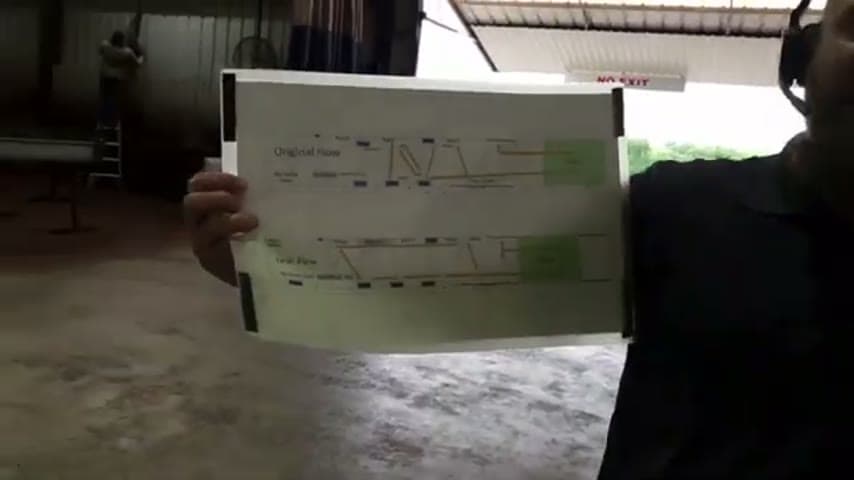
Material entered the fab shop and bounced all over the place, racking up transport and handling before it reached paint and shipping.
The team relaid the whole shop into a single lean flow path that carries work in, through paint, and out the door in one direction.
Arrange the workspace so product moves in one continuous direction from receiving to shipping.
What is a Fab Shop Single-Flow Layout?
One-piece flow is a layout where a part moves steadily through each process step in sequence rather than piling up and being shuttled between scattered stations. The goal is a single, predictable path from raw material to finished output.
In this fab shop the path runs from where material comes in, straight through fabrication, into paint, and back out the door. There are no backtracks or side trips that add handling without adding value.
The layout itself becomes the standard. Because the route is fixed and visible, anyone can see where a part should be and where it goes next, so the correct flow is repeatable across every job.
Why it works
A fixed flow path turns a proven routing into a visible standard everyone can reuse.
- The single path makes the right sequence obvious, so operators do not have to relearn where work goes.
- A one-direction layout mistake-proofs routing by removing the option to send work the wrong way.
- Time not spent chasing and moving parts is time spent adding value for the customer.
- The visible flow lets anyone spot when a part is out of place or stalled.
How to create this idea
- 1Map the current path
Trace how material actually moves today and mark every place it racks up, backtracks, or bounces between stations.
- 2Define the ideal sequence
List the process steps in order, from receiving through paint to shipping, and identify the shortest one-direction route.
- 3Relay the shop to the sequence
Reposition stations, racks, and paint so equipment sits in the order the work flows, not where it happened to land.
- 4Fix the in and out points
Set a single entry for incoming material and a single exit out the door so the path has clear ends.
- 5Make the path visible
Use floor markings or lane layout so anyone can see the correct flow and catch parts that are off the path.
Best used when
- fabrication shops
- material bouncing around
- high transport waste
- layout redesign
Less useful when
- highly variable routings
- fixed heavy equipment
- very low volume
Tags
- Problem
- excess transportmaterial handlingbacktracking
- Lean methods
- one-piece flowlayout redesignvalue stream
- Application
- fab shopfabricationpaint line
Captured from TheAMEConnect at Southwest Steel Buildings in the video "AME 2 Second Lean Tour: Southwest Steel Buildings", at 00:27:03. On Lean Toolbox. Watch the original video on YouTube ↗