Daily Chore Standards: Assign Bathroom and Breakroom Resets So Shared Areas Start Ready
A daily standard makes shared area reset work clear, assigned, and repeatable.

- Creator
 WillytheMinimalist
- Company
- Hunter Trim & Cabinets Inc.
- Wastes
Bathrooms and break rooms can start the day unready when reset work is informal, responsibilities are unclear, and people rely on memory instead of a shared standard.
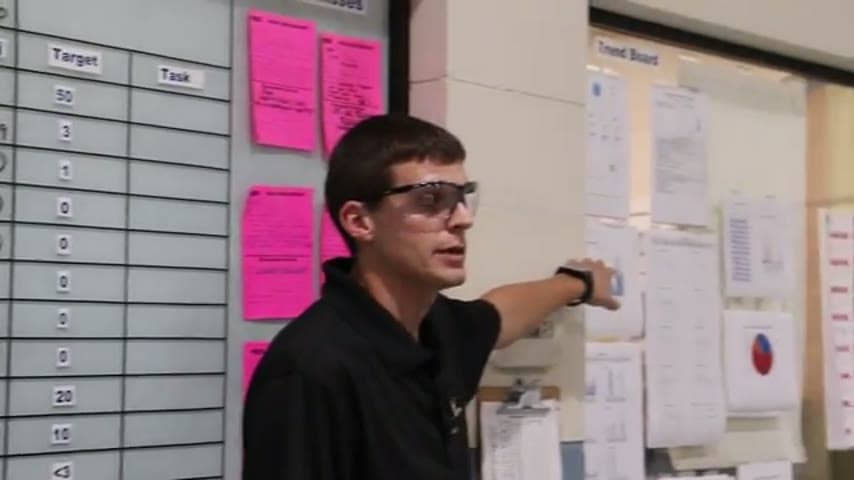
The team used daily morning chore standards as standard operating procedures. The standards defined how the work was supposed to be done and who was responsible for bathroom and break room reset tasks.
Make routine knowledge visible so proven resets are reused every day.
What is a Daily Chore Standards?
A daily chore standard is a simple standard operating procedure for recurring reset work. It defines what must be done, how the work should be done, and who is responsible.
In this example, the standard covered shared support areas, specifically bathrooms and break rooms. These areas affect the start of the day, so the team made the reset routine part of daily morning chores.
The standard captures knowledge that would otherwise depend on memory, habit, or informal reminders. Current and new team members can reuse the same proven routine instead of guessing what ready means.
Why it works
Daily chore standards work because they convert repeated local knowledge into a visible routine that can be reused consistently.
- Knowledge reuse: the reset method is documented as a standard, so the team repeats the known way instead of re-solving the same daily problem.
- Added value: ready bathrooms and break rooms support the workday by keeping shared areas usable when people need them.
- Mistake-proofing: named responsibility reduces missed tasks, duplicate assumptions, and unclear ownership.
- Consistency: the same standard defines how the work should be done, so readiness does not depend on who happens to notice the problem.
Evidence: The transcript describes the daily morning chores as the standard operating procedures, the standard of how the work was supposed to be done, and who was responsible for the break rooms and bathrooms.
How to create this idea
- 1Choose shared areas
Start with common spaces that must be ready every day, such as bathrooms and break rooms.
- 2List reset tasks
Write the tasks required to return each area to its ready condition. Use plain wording so the standard is easy to follow.
- 3Define the method
State how the work is supposed to be done. Make the expected finish condition clear enough that different people can get the same result.
- 4Assign responsibility
Name who is responsible for each area or task. Avoid vague group ownership unless the handoff is defined.
- 5Run it daily
Build the reset into the daily morning routine. Keep the standard where the team can access it before doing the work.
- 6Improve the standard
If an area does not start ready, update the task list, method, or assignment. Treat the standard as the current best known way.
Best used when
- shared spaces
- daily resets
- unclear ownership
- support areas
Less useful when
- one time cleanup
- single user area
- rarely used space
Tags
- Problem
- unclear ownershipmissed tasksdefects
- Lean methods
- standard workvisual managementdaily management
- Application
- bathroombreakroomfacilities
Captured from WillytheMinimalist at Hunter Trim & Cabinets Inc. in the video "Lean Tour of Hunter Trim & Cabinets Inc.", at 00:00:18. On Lean Toolbox. Watch the original video on YouTube ↗