Color-Coded Hoses and Tools to Prevent Mismatches
Match each hose to its tool by color so the correct pairing is obvious at a glance.
- Creator
 American Precision Engineering
- Company
- American Precision Engineering
- Wastes
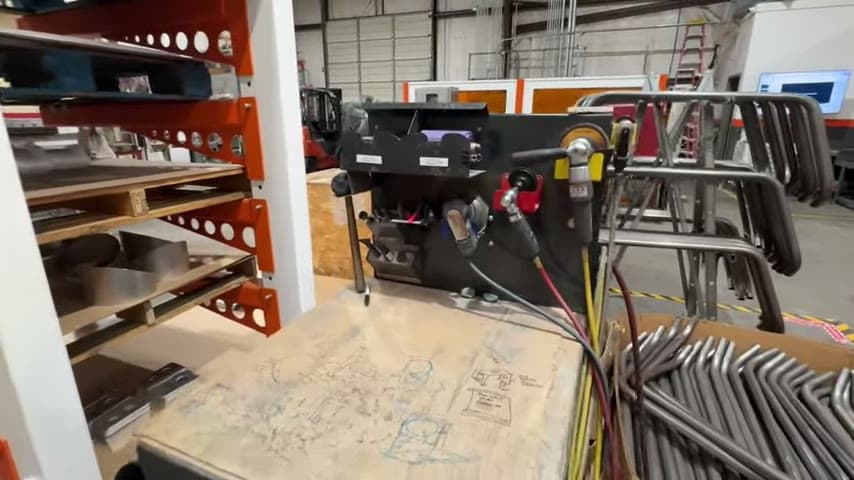
A workstation had many hoses and cords that looked alike, making it easy to connect the wrong hose to the wrong tool and slowing setup while inviting errors.
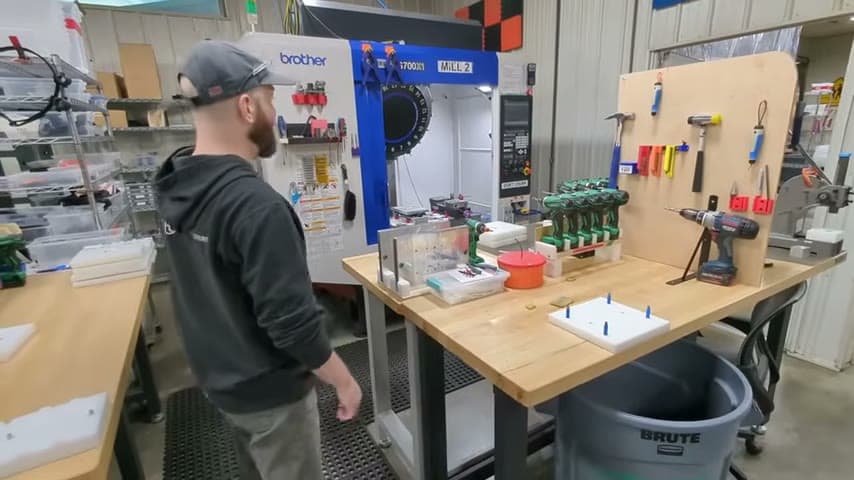
The team color coded every hose and tool so blue hose goes to the blue tool, red to red, yellow to yellow, and so on, making each correct pairing self-evident.
Encode the correct match visually so mistakes are impossible to make without noticing.
What is a Color-Coded Hoses and Tools to Prevent Mismatches?
Color coding is a visual control that assigns a single color to each matching pair of items, here a hose and the tool it feeds. Instead of relying on memory or reading labels, a worker just matches blue to blue and red to red.
This turns a tangle of similar-looking cords into an instantly readable system. The color itself carries the knowledge of which pairing is correct, so any worker, including a new one, can connect the right hose without being told.
Over time the team layered on small tweaks, such as adding a hammer at the station for knocking slugs out of parts, so the color-coded layout stays the working baseline everyone builds on.
Why it works
Color coding captures the correct pairing as a shared, visible standard that anyone can reuse without training or guesswork.
- The right match is built into the color, so proven correct usage is always visible.
- Anyone can connect hoses correctly the first time, so knowledge is not locked in one person's head.
- A wrong connection stands out immediately because the colors do not match, mistake-proofing the setup.
- The scheme is a stable baseline that small improvements can be added onto over time.
Evidence: The team reports the setup has worked excellent since it was introduced, with only a few small tweaks added.
How to create this idea
- 1List the pairs that get confused
Identify each hose and the specific tool it must connect to at the station.
- 2Assign one color per pair
Give each hose-and-tool pairing a distinct color such as blue, red, or yellow.
- 3Mark both ends
Apply the color to the hose and to its matching tool so the pairing reads at a glance.
- 4Confirm colors stay distinct
Choose colors that are easy to tell apart under real lighting to avoid new mismatches.
- 5Add small refinements over time
Layer in extra tools like a hammer for knocking out slugs while keeping the color scheme intact.
Best used when
- many similar hoses or cords
- frequent connect and disconnect
- mixed-skill operators
Less useful when
- only one hose
- connections never change
- colors hard to distinguish
Products and tools mentioned
Tags
- Problem
- mismatcheswrong connectionsetup errors
- Lean methods
- visual controlcolor codingmistake-proofing
- Application
- hose managementtoolingworkstation setup
Captured from American Precision Engineering at American Precision Engineering in the video "Tour of APE's lean shop", at 00:04:56. On Lean Toolbox. Watch the original video on YouTube ↗