Instructional Slides Built Into the Morning Meeting Deck
Embed guidance slides in the standup deck so any presenter knows what each section is for and runs the meeting the same way.
- Creator
 TheAMEConnect
- Improvement date
- June 16, 2024
- Company
 Southwest Steel Buildings
- Wastes
Daily standup meetings drift when different people run them. Without shared guidance, presenters skip sections, change the purpose, or run the meeting inconsistently, so it fails to set the tone, leave a plan, spur improvement, and set a challenge.
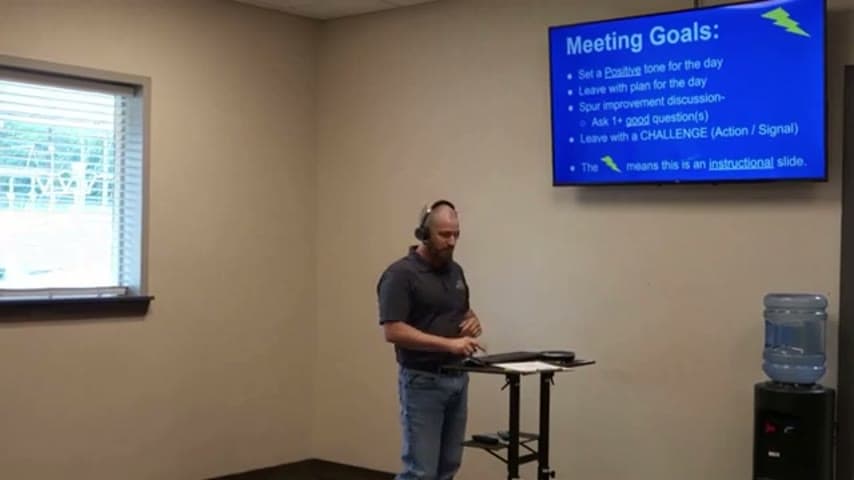
The team added instructional slides directly into the morning meeting deck. Marked with a lightning bolt, these slides are hidden during the live meeting but visible to anyone preparing it. Each one explains what that section is for so presenters follow the same structure every day.
Make the standard for a recurring process visible inside the tool where the work happens.
What is a Instructional Slides Built Into the Morning Meeting Deck?
An instructional slide is a guidance page built into a working deck that explains how to run a section, not content shown to the audience. In this morning meeting deck, these slides carry a lightning bolt icon and are hidden or unhidden as needed. During the live standup they stay out of the way, but a presenter preparing the meeting opens them to see the purpose of each part.
The deck is organized around four goals: set the tone for the day, leave with a plan, spur improvement discussion, and leave with a challenge. The instructional slides tie each meeting section back to one of those goals, so the person running it understands intent, not just the running order.
This turns tribal knowledge about how the meeting should feel into a reusable, in-place reference. New or rotating presenters do not need a separate playbook or a coach standing over them; the standard travels with the deck itself.
Why it works
It captures how an experienced facilitator runs the meeting and makes that knowledge reusable by anyone who opens the deck.
- Proven meeting structure is documented once and reused by every presenter.
- Guidance lives inside the deck, so it is found exactly when preparing the meeting.
- Consistent sections mistake-proof the meeting against skipped or misused segments.
- Rotating or new presenters inherit the standard without separate training.
How to create this idea
- 1Name the meeting goals
Define the few outcomes the meeting must achieve, such as set the tone, leave with a plan, spur improvement, and set a challenge.
- 2Map sections to goals
List each part of the meeting and tie it to one of the goals so its purpose is explicit.
- 3Write one instructional slide per section
For each section, add a slide that explains what it is for and how to run it.
- 4Mark and hide them
Flag guidance slides with a clear icon like a lightning bolt and hide them during the live meeting.
- 5Point presenters to them during prep
Make it routine that whoever prepares the meeting reads the instructional slides first.
Best used when
- recurring meetings
- rotating presenters
- standardized standups
Less useful when
- one-off meetings
- single fixed facilitator
- very short check-ins
Tags
- Problem
- inconsistent meetingsunclear intent
- Lean methods
- mistake-proofingvisualstandard work
- Application
- daily standupmeetings
Captured from TheAMEConnect at Southwest Steel Buildings in the video "AME 2 Second Lean Tour: Southwest Steel Buildings", at 00:04:02. On Lean Toolbox. Watch the original video on YouTube ↗