One Switch Blow Down Station: Charge the Ionizing Gun, Start Dust Collection, and Open the Gate
A single switch puts the whole blow down station in the correct state before plastic parts are cleaned.
- Creator
 Audacity Micro
- Company
- Henry Holsters
- Wastes
Cleaning plastic parts after grommet installation and touch-up buffing depends on several support systems. If the ionizing air gun is not charged, the dust collector is not running, or the gate is not open, dust can remain on the part or fail to go into collection.
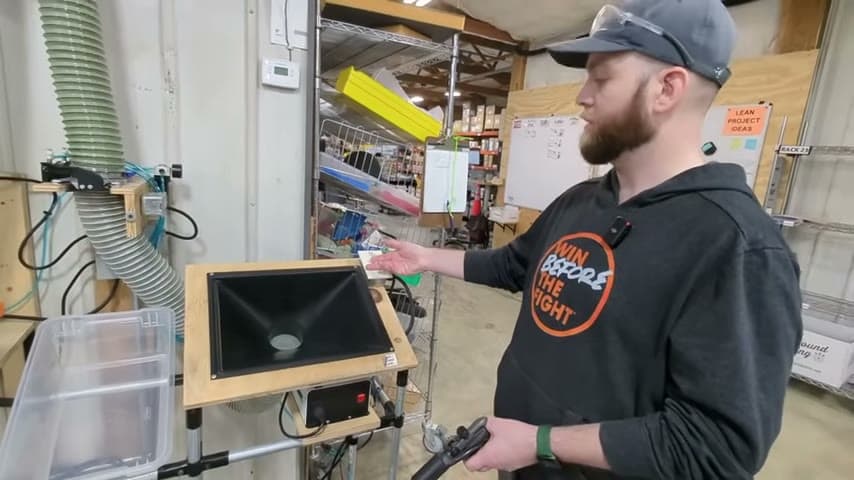
The team connected one switch to charge the ionizing air gun, turn on the dust collector, and open the dust collection gate. When the switch is turned off, a one minute timer keeps the dust collection running briefly.
Build the proven method into the equipment so it is reused every time.
What is a One Switch Blow Down Station?
A one switch blow down station is a cleaning setup where one operator control starts all required support functions. In this case, the switch charges the ionizing air gun, starts the dust collector, and opens the dust collection gate.
The station is used on plastic parts after metal eyelets or grommets are installed and after any touch-up buffing. The ionizing air gun kills static charge on the plastic while the dust collector captures debris blown off the part.
The improvement turns the correct setup into a built-in standard. Operators do not need to remember three separate actions before cleaning. One switch makes the proven condition visible and repeatable.
Why it works
It reuses the known good cleaning sequence by embedding it in the station controls.
- Knowledge reuse: the required setup is captured in the switch logic, so each operator starts from the same proven condition.
- Added value: static control and dust collection directly support a cleaner plastic part after buffing or grommet work.
- Mistake-proofing: the operator is less likely to blow parts off without the gun charged, the collector running, and the gate open.
- Standard shutdown: the one minute timer preserves the proven run-on behavior without a separate operator decision.
Evidence: The transcript states that the switch charges the gun, turns on the dust collector, opens the gate, and that switching it off starts a one minute timer for dust collection.
How to create this idea
- 1Define the required setup
List every device that must be active before blow down starts. For this station, that means the ionizing air gun, dust collector, and dust collection gate.
- 2Choose one control
Make one electrical switch the visible start point for the task. The operator should not need to hunt for separate controls.
- 3Link the devices
Connect the ionizing air gun, dust collector, and gate so they activate from the same switch. Use qualified electrical support for circuit changes.
- 4Add shutdown timing
If dust collection should keep running after blow down stops, add a timer. Match the delay to the cleanup need, as this station uses a one minute timer.
- 5Test with real parts
Run the station after grommet installation and touch-up buffing. Confirm the gun charges, collection starts, the gate opens, and dust is pulled into collection.
- 6Label the standard
Label the switch and station function clearly. This helps new operators reuse the same proven setup without relying on memory.
Best used when
- plastic parts
- static dust
- blow down stations
- buffing cleanup
- shared stations
Less useful when
- single device tasks
- independent controls needed
- no dust collection
- variable sequence work
Products and tools mentioned
- Dust collection blast gate: Opens with the switch so collection airflow is available.
- Dust collector: System capturing dust and debris from machines to keep air clean.
- Electrical switch: Provides one start action for the buffer and dust collector.
- Ionizing air gun: Neutralizes static charge on plastic parts during blowdown.
- Metal grommets: Installed into parts before touch-up and cleaning.
- Press: Used upstream to install metal eyelets or grommets.
- Timer: Keeps dust collection running for one minute after the switch is turned off.
Tags
- Problem
- defectswaitingduststatic
- Lean methods
- mistake proofingstandard workknowledge reuse
- Application
- cleaningplasticsdust collectionfinishing
Captured from Audacity Micro at Henry Holsters in the video "THIS is what a LEAN shop looks like - Lean Machine Shop Tour", at 00:16:38. On Lean Toolbox. Watch the original video on YouTube ↗