Dust Collector Status Lamp: Make a Quiet Collector Visibly Confirmed Running
A status lamp shows the dust collector state at the buffing station so operators do not have to rely on sound.
- Creator
 Audacity Micro
- Company
- Henry Holsters
- Wastes
The dust collector is quiet, so operators may not notice whether it is running. If its state is not visible, it can stay on unnoticed or be hard to confirm during buffing.
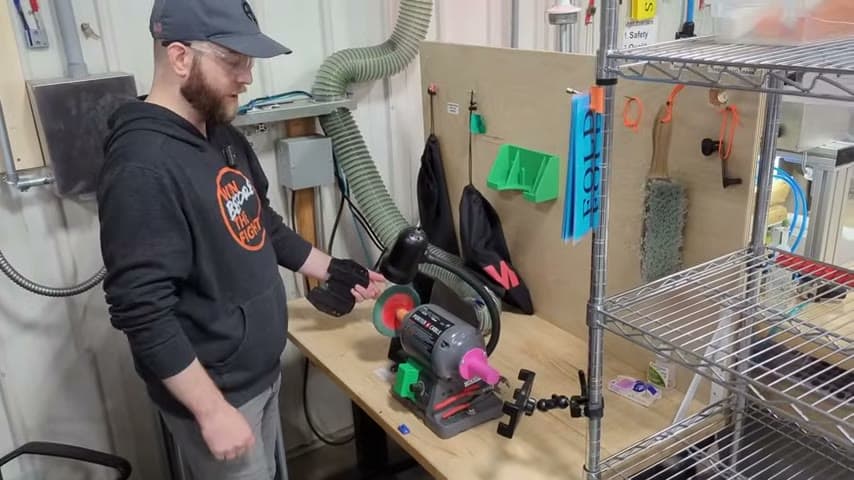
The team added a status lamp for the dust collector. The station uses one switch to power the buffer and turn on dust collection, and the lamp makes the collector state visible.
Make hidden equipment status visible and reusable at the point of work.
What is a Dust Collector Status Lamp?
A dust collector status lamp is a visible indicator tied to the dust collector state. When the collector is running, the lamp gives a clear visual confirmation instead of relying on sound.
At this buffing station, one switch powers the buffer and turns on dust collection. Because the dust collector is quiet, the status lamp gives every operator the same simple cue that the collector is on.
This is visual management and mistake-proofing. It turns a hidden condition into shared knowledge that can be reused by anyone working at the station.
Why it works
The lamp makes the proven condition visible: buffing should happen with the dust collector state clearly confirmed.
- It makes quiet equipment status visible, so each operator does not have to guess or relearn how to check it.
- It adds value by supporting the buffing process with a clear condition check at the point of use.
- It mistake-proofs the station by reducing the chance that a quiet collector is overlooked or left running unnoticed.
- It converts local knowledge, this collector is quiet, into a standard visual signal anyone can understand.
Evidence: The transcript says one switch powers the buffer and turns on dust collection, and that the team uses a status lamp because the dust collector is quiet enough that it may not be noticed.
How to create this idea
- 1Find hidden status
Look for equipment whose state matters but is hard to confirm by sound or sight. Quiet dust collectors, fans, and pumps are common examples.
- 2Define the signal
Decide exactly what the lamp means. Keep it to one clear message, such as dust collector running.
- 3Use a visible lamp
Install a status lamp that can be seen from the normal work position. It should not require the operator to walk, listen, or interpret a complex display.
- 4Tie it to the collector
Connect the lamp to the dust collector control or running state so it reflects the real condition. Use qualified electrical support where required.
- 5Standardize the meaning
Teach the rule in the work instruction: lamp on means the collector is running, lamp off means stop and check before buffing.
- 6Repeat where useful
Apply the same visual cue to other quiet equipment so the knowledge is reused across stations.
Best used when
- quiet equipment
- shared switches
- dust collection
- buffing stations
- hidden status
Less useful when
- status obvious
- auto shutoff present
- temporary setup
- no status risk
Products and tools mentioned
- Buffer: Used to finish and buff sharp cut edges.
- Dust collector: System capturing dust and debris from machines to keep air clean.
- Nonwoven abrasive wheel: Scotch-Brite wheels are used in the buffing and edge breaking process.
- Status lamp: Shows that the quiet dust collector is running.
Tags
- Problem
- hidden statusmissed shutdownprocess errors
- Lean methods
- visual managementpoka yokestandard work
- Application
- buffingdust collectionfinishing
Captured from Audacity Micro at Henry Holsters in the video "THIS is what a LEAN shop looks like - Lean Machine Shop Tour", at 00:14:56. On Lean Toolbox. Watch the original video on YouTube ↗