Mount a Reciprocating Saw on the Forklift for Point-of-Use Timber Cutting
Keep the cutting tool where the work happens so operators never trek back to the building for a saw.
- Creator
 TheAMEConnect
- Improvement date
- June 16, 2024
- Company
 Southwest Steel Buildings
- Wastes
Cutting timbers meant returning to the building to find a saw or rigging up a makeshift solution, interrupting the job at the point of use.
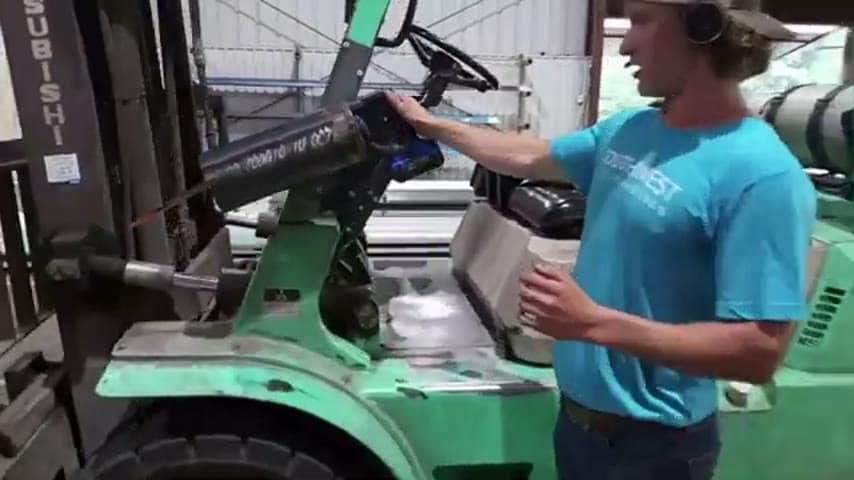
The team mounted a reciprocating saw (sawzall) directly on the forklift, with power, so timbers can be cut immediately wherever the forklift is working.
Bring the tool to the point of use so the right tool is always at hand.
What is a Mount a Reciprocating Saw on the Forklift for Point-of-Use Timber Cutting?
This is a point-of-use tooling setup: a reciprocating saw is fixed to the forklift along with its power source. Whenever timbers need trimming, the operator cuts on the spot instead of driving back for a tool.
It turns a recurring interruption into a built-in capability of the machine. The saw travels with the work rather than living in a fixed shop location.
By putting the proven tool and its power where cutting actually occurs, the team removes the temptation to improvise, which is slower and less safe.
Why it works
Making the right tool visible and always present locks in a proven method instead of leaving it to improvisation.
- The correct tool is standardized onto the machine so every operator uses the same reliable method.
- It eliminates makeshift workarounds that add risk and inconsistency.
- Powered and mounted, the saw is ready to use the moment a cut is needed, adding value at the point of work.
- The setup reflects a mindset of not tolerating tasks that take longer than they should.
How to create this idea
- 1Spot the recurring interruption
Notice tasks where operators leave the work area to fetch a tool or improvise, such as cutting timbers.
- 2Choose the right tool
Select a reciprocating saw (sawzall) capable of cutting the timbers you handle.
- 3Mount it on the machine
Fix the saw securely to the forklift so it travels with the work and stays out of the way.
- 4Provide onboard power
Wire or supply power at the mount so the saw is ready without hunting for an outlet or cord.
- 5Confirm safe, immediate use
Verify operators can grab, cut, and re-stow the saw safely at the point of use.
Best used when
- mobile equipment does cutting work
- frequent on-site timber trimming
- tool retrieval interrupts jobs
Less useful when
- cutting is rare
- fixed workstation exists
- no safe mounting point
Products and tools mentioned
- forklift: Powered truck used to lift and move palletized loads around the facility.
- reciprocating saw: Handheld saw with a push-pull blade for cutting metal, wood, and pipe.
Tags
- Problem
- tool retrievalmakeshift workaroundsinterruptions
- Lean methods
- point of usestandard toolingmistake-proofing
- Application
- timber cuttingforkliftmaterial handling
Captured from TheAMEConnect at Southwest Steel Buildings in the video "AME 2 Second Lean Tour: Southwest Steel Buildings", at 00:22:06. On Lean Toolbox. Watch the original video on YouTube ↗