Quick Die Change: Cut Heavy Die Swaps From Four Hours to Five Minutes
Hydraulic clamps and a dedicated setup turn a 1,000-pound die change into a fast, repeatable procedure.
- Creator
 WillytheMinimalist
- Company
- Stamping Plant
- Wastes
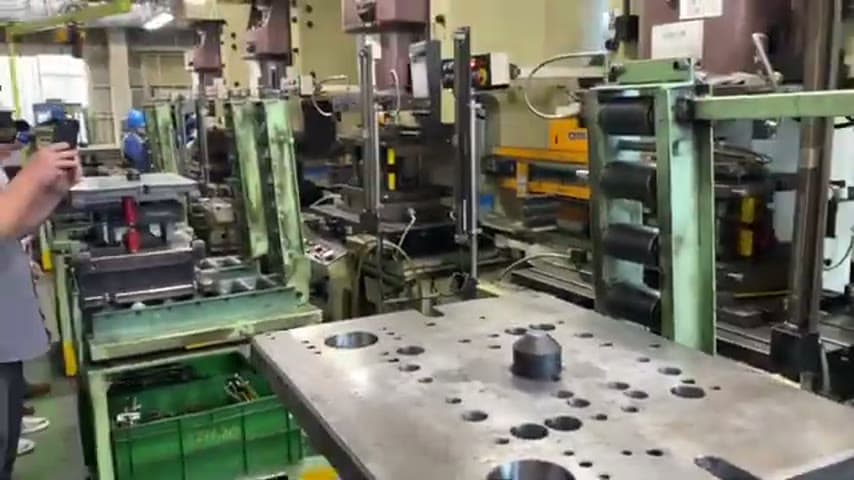
Exchanging heavy dies (about a thousand pounds each) on the machines took around four hours, stalling production and forcing operators to wait through a slow, manual changeover.
The team added hydraulic clamps and a dedicated setup for the die exchange, reducing the changeover from four hours to about five minutes.
Convert slow, manual changeovers into fast, standardized setups so a proven method is repeatable by anyone.
What is a Quick Die Change?
Quick die change is a form of SMED (Single-Minute Exchange of Die), a Lean method for shrinking the time it takes to switch a machine from one job to the next. Instead of manually bolting and unbolting heavy tooling, the machine is fitted with hydraulic clamps that grip and release dies at the press of a control.
Here the dies weigh about a thousand pounds each. A dedicated setup, meaning fixtures, alignment aids, and clamping designed around this specific exchange, lets an operator drop in a new die and lock it in place without slow, error-prone manual work.
The result is a changeover that used to take four hours completed in about five minutes. That speed makes small batches and quick job switches practical rather than something to avoid.
Why it works
The gain is not just a faster swap; it captures the right setup into hardware so every operator repeats the proven method.
- Hydraulic clamps make the correct clamping force and position automatic, removing guesswork.
- A dedicated setup encodes the known-good procedure so knowledge does not live only in an expert's hands.
- A five-minute, repeatable change lets the team run smaller batches and respond to demand without penalty.
- Standardized clamping reduces the risk of a misaligned or loose die causing scrap or damage.
Evidence: A changeover that typically took four hours was reduced to about five minutes on machines exchanging dies of roughly a thousand pounds each.
How to create this idea
- 1Time the current changeover
Record how long a die swap takes today and which steps consume the most time, especially manual clamping and alignment.
- 2Separate internal from external work
Identify tasks that can be done before the machine stops (staging the next die, prepping tools) versus those that must happen while it is down.
- 3Add hydraulic clamps
Replace manual bolting with hydraulic clamps sized for the die weight so release and lock happen fast and with consistent force.
- 4Build a dedicated setup
Design fixtures and alignment aids so each die seats in the same position every time, removing measurement and adjustment steps.
- 5Standardize and train
Write the new procedure, train every operator, and confirm the changeover time holds across shifts.
Best used when
- heavy die changes
- frequent job changeovers
- long manual setups
- small batch production
Less useful when
- single long production runs
- no tooling changes
- very light hand-swapped tooling
Products and tools mentioned
- Hydraulic clamps: Hold and release the heavy dies quickly, replacing manual bolting.
Tags
- Problem
- long changeoverwaitingheavy tooling
- Lean methods
- SMEDquick changeoverstandard work
- Application
- die changepress machinestooling setup
Captured from WillytheMinimalist at Stamping Plant in the video "Japan Day 6 Stamping Plant Tour", at 00:02:00. On Lean Toolbox. Watch the original video on YouTube ↗